


What these coatings protect against, the main systems used in commercial settings, and what to check before choosing one for a facility
A manufacturing plant, a mining site, a retail fit-out, a hospital ward: each one runs equipment and surfaces that take a beating every single day. Rust creeps into steel, chemicals eat away at unprotected finishes, and constant foot or wheel traffic wears surfaces down faster than most maintenance budgets can keep up with.
Industrial coatings solve that by adding a chemical and physical barrier engineered for the specific stress a surface faces. This guide covers what these coatings actually protect against, the main systems used in commercial and industrial settings, how durability claims get tested, and what to check before choosing one for a facility.
What Industrial Coatings Are Actually Built to Resist
A commercial or industrial coating is a protective layer engineered to sit between a surface and whatever is wearing it down on the job. In practice, that usually means resisting a specific combination of stresses rather than just one.
- Abrasion from foot traffic, wheeled equipment, or handling
- Corrosion and rust from moisture, humidity, and salt exposure
- Chemicals and solvents used in cleaning or production processes
- Acid rain and other airborne pollutants in outdoor or coastal settings
- Mineral deposits and scaling in water-handling equipment
- UV exposure and temperature swings that cause fading and material fatigue
Getting the coating right cuts down on cleaning and repair downtime, lowers ongoing maintenance costs, and extends the working life of the equipment or infrastructure underneath it.
The Main Types of Industrial Coating Solutions
Not every industrial coating solves the same problem, and most facilities end up using more than one type across different assets.
- Anti-corrosion clear coatings: transparent formulas designed to skip the primer step entirely, aimed at metal surfaces exposed to constant moisture or salt. Products in this category are commonlyvalidated against ASTM salt-spray and immersion protocols, with some published results reaching 6,000 hours of salt-spray exposure and 4,000 hours of immersion before failure
- Industrial ceramic coatings: hard, cured coatings built to resist chemicals, fuel, dirt, and grime buildup on machinery and equipment, typically rated for a few hundred hours of salt-spray exposure alongside strong UV stability
- Graphene-reinforced liner coatings: coatings reinforced with graphene nanotubes for high impact and abrasion resistance, often formulated with a flexible, anti-skidfinish and rated for both indoor and outdoor use, including marine surfaces above the waterline
- Photocatalytic disinfectant coatings: coatings built around titanium dioxide (TiO2) nanoparticles that react under UV light to generate reactive oxygen species, which break down bacteria, viruses, and organic residue on high-touch surfaces in healthcare, education, and office settings
NOTE
Photocatalytic disinfection is not a marketing invention. Published research on titanium dioxide coatings describes the same mechanism used commercially: reactive oxygen species generated under UV exposure cause bacterial cell walls to leak and break down, which is why the effect is described as continuous rather than a one-time clean.
How These Durability Claims Actually Get Tested
Most corrosion resistance numbers trace back to ASTM B117, a salt-spray (fog) test first published in 1939 and still the most widely used corrosion benchmark in the coatings industry. Test specimens sit in a chamber under a continuous fine mist of salt solution at a fixed temperature, and the test tracks how long a coating holds up before rust or coating failure appears.
COMMON MISTAKE
A high salt-spray hour count is a useful comparative figure, but the standard itself is explicit that it compares specimens tested together under identical chamber conditions, not that it predicts an exact real-world lifespan. Treat it as one data point, not a guarantee, and ask what substrate and thickness the published hours were tested on.
Where Commercial and Industrial Coatings Get Applied
- Manufacturing and production equipment exposed to daily chemical and mechanical wear
- Heavy machinery in mining, construction, and agriculture, where abrasion, corrosion, and extreme temperatures are constant
- Pipes, valves, pumps, and fittings, where corrosion and mineral buildup affect water quality and system performance
- Marine surfaces above the waterline exposed to salt air and UV
- Retail and community spaces with high foot traffic
- Healthcare and education facilities, where photocatalytic coatings support hygiene onfrequently touched surfaces
The Sustainability Side of Industrial Coatings
Zero or low VOC (volatile organic compound) formulations matter for two reasons: they cut the air quality risk to workers applying and working near the coating, and many buyers now need REACH compliance as a baseline requirement. REACH is the EU regulation that governs how chemical substances are registered and assessed for risk to human health and the environment, and it has become a common reference point for coating safety even outside the EU.
Coatings manufactured under ISO-certified quality processes, free from heavy metals, also cut down on the harsh cleaning chemicals a facility needs over time, which reduces both cost and environmental impact across the life of the asset.
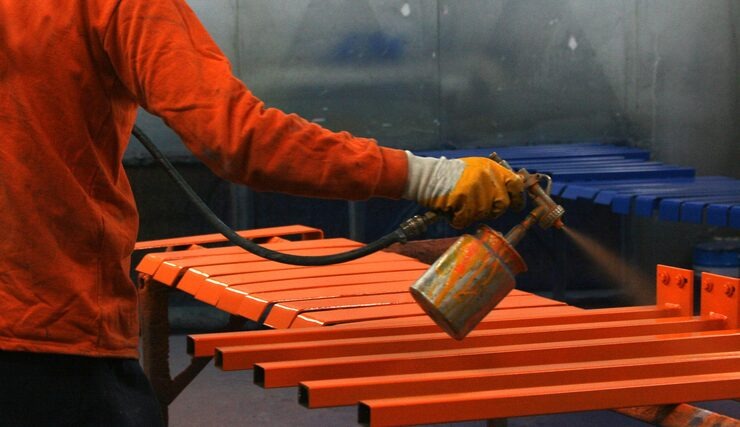
What to Check Before Choosing a Commercial Coating Applicator
Before signing off on an industrial coating job
- Ask for the specific ASTM or ISO test data behind any corrosion or durability claim, including the substrate it was tested on
- Confirm the coating isvalidated for your exact environment: indoor, outdoor, marine, or high-chemical exposure
- Check VOC content and REACH or food-safe certification if the facility has health or environmental compliance requirements
- Ask what surface preparation is included, since prep quality affects the outcome as much as the coating itself
- Get warranty terms in writing, including what voids them
Common Mistakes to Avoid
COMMON MISTAKE
Treating a headline durability number as a guarantee without asking for the actual test report behind it.
COMMON MISTAKE
Assuming one coating product works across every substrate on site. Metal, concrete, stone, and plastic each need a formula engineered for that material.
COMMON MISTAKE
Underestimating surface preparation time and cost, which is consistently the biggest factor in whether an industrial coating performs as expected.
Specialist applicators exist for a reason. Operators such as Pro Image Coating Systems apply industrial coating systems across mining, construction, and facility maintenance work in Australia, sourcing exclusively from IGL Coatings and manufacturing under ISO-certified quality processes. That kind of sourcing transparency is worth asking about regardless of which applicator ends up doing the work.
FAQs
What is the difference between an anti-corrosion coating and an industrial ceramic coating?
Anti-corrosion coatings are usually transparent, primerless formulas built specifically to stop rust and moisture damage on metal, often tested to very high salt-spray hour counts. Industrial ceramic coatings are broader-purpose, hard-cured coatings aimed at resisting chemicals, fuel, dirt, and general wear on machinery and hard surfaces. The two often get used together on the same asset.
How long do industrial coatings actually last on commercial equipment?
It depends on the coating type, the substrate, and how harsh the environment is, so any single lifespan number should be treated as an estimate rather than a promise. Manufacturers typically publish accelerated lab results, like salt-spray or immersion hours, and convert those into a real-world range. Proper surface preparation and matching the coating to the actual environment affect the outcome more than the brand.
Can industrial coatings actually reduce cleaning and maintenance costs?
Yes, this is one of their main commercial selling points. A coating that resists corrosion, chemical staining, and dirt buildup means less frequent cleaning, fewer harsh chemicals needed, and less downtime for repairs, which adds up across a facility’s asset base over time.
Are photocatalytic disinfectant coatings actually effective at reducing bacteria?
Published research on titanium dioxide coatings supports the underlying mechanism: UV exposure triggers reactive oxygen species that break down bacterial cell walls. Real-world effectiveness depends on adequate UV exposure and surface contact, so these coatings work best on frequently touched, well-lit surfaces rather than as a blanket replacement for regular cleaning.
Are industrial coatings safe for facilities with strict environmental or health standards?
Reputable industrial coatings increasingly are, but this varies by manufacturer and should be checked directly. Look for zero or low VOC content, REACH compliance, and ISO-certified manufacturing, particularly for healthcare facilities, schools, or food-adjacent environments where chemical exposure rules are stricter.
Does an industrial coating need to be reapplied on a schedule, or is it a one-time job?
It depends on the product and the environment. Some anti-corrosion and ceramic systems are designed for multi-year performance with minimal upkeep, while photocatalytic coatings can remain functional for a decade or more since the active nanoparticles act as a catalyst rather than a substance that gets used up. Ask for the manufacturer’s maintenance schedule rather than assuming any coating is permanent.
The Short Version
Industrial and commercial coatings are only as good as the match between the product and the actual stress a surface faces. The right approach is to identify what a surface is really up against, whether that is corrosion, chemicals, abrasion, or bacteria, and choose a system with real test data behind it rather than a headline number.