
Home Blog

What Makes The Alary Apartments Ideal for Modern Living in The Alary Westchester?

0

Elevated living isn’t an abstract concept. It’s a measurable difference in the quality of your daily experience in how your home looks, how it functions, how it’s managed, and how it connects you to the broader community around it.

The Alary apartments in Westchester County have been designed to elevate the everyday. Not through unnecessary extravagance, but through consistent quality and careful attention to what actually matters to modern residents.

What Elevated Living Actually Means

The phrase “elevated living” can feel vague. It’s worth being specific about what it means in the context of The Alary Westchester apartments.

Elevated living means waking up in a bedroom that’s quiet, comfortable, and well-proportioned. It means a kitchen that handles your actual cooking habits rather than one designed for photographs. It means a management team that resolves your maintenance request before the week is out rather than weeks later.

It means amenities that you actually use, neighbors who share your standards, and a location that makes your daily logistics simpler rather than more complicated.

This is what The Alary delivers consistently, across all of these dimensions.

The Design Philosophy Behind The Alary

The Alary’s design starts from a clear premise: residents deserve homes that are both beautiful and functional. These goals are often treated as competing priorities in apartment design. The Alary treats them as complementary.

Layouts are created around the way people actually move through and use domestic space. Kitchens are positioned to be social as well as functional. Living areas flow naturally to outdoor spaces where they exist. Bedrooms are separated from active living areas to support rest.

Aesthetic choices material palettes, fixture selections, color schemes are made with long-term appeal in mind rather than moment-in-time trend chasing. The result is a residential environment that feels contemporary without being dated after a few years.

Finishes and Features That Raise the Bar

The finishes at The Alary are selected with care and installed with precision. Kitchen countertops are solid-surface materials chosen for visual appeal, durability, and ease of maintenance. Cabinetry is full-height where possible, maximizing storage capacity while maintaining a clean visual line.

Bathroom fixtures reflect a commitment to both aesthetics and daily functionality, the kind of showerhead that delivers genuine satisfaction rather than marginal performance. Vanities have real storage built in rather than decorative-only cabinetry.

Flooring choices across unit types are consistent in quality and selected to handle real-world use. Lighting packages both natural and artificial are planned to support multiple modes of use: bright task lighting in working areas, warmer ambient options for relaxation spaces.

Amenity Experiences Worth Talking About

Residents at The Alary don’t just list the amenities they describe. The morning workout in a well-equipped fitness center that doesn’t require waiting for equipment. The evening spent on the rooftop with a view that feels far more expensive than it is. The productive afternoon in a co-working space that’s quieter and better-equipped than many dedicated office environments.

These aren’t aspirational descriptions of an imagined lifestyle. They’re the actual daily experiences of people who live at The Alary and who have stopped thinking of the amenities as bonus features and started thinking of them as essential parts of their routine.

The Westchester County Context

The Alary’s position in Westchester County adds a broader context to the elevated living experience. Westchester is one of the most desirable residential regions in the Northeast a county that combines proximity to New York City with a quality of life that the city itself can’t provide.

Parks, cultural institutions, excellent schools, diverse dining, and a strong professional community define the regional character. Metro-North rail service integrates Westchester seamlessly into the New York metro area without the density and cost of Manhattan living.

The Alary sits at the intersection of this regional quality and its own exceptional building-level quality, offering residents the best of both scales.

Why Elevated Living Has Lasting Value

The decision to choose elevated living isn’t just about immediate experience, it’s about long-term value. Residents who invest in a premium living environment typically find that the quality of their daily experience improves in ways that extend beyond the apartment itself.

Reduced stress from a well-managed building. Improved health from accessible fitness facilities and better living environments. Enhanced social life from a community of engaged, quality-conscious neighbors. These effects compound over time.

The Alary’s commitment to maintaining its standards ensures that these benefits don’t erode as months become years.

FAQ

Q1: What does “elevated living” mean at The Alary apartments specifically? At The Alary, elevated living means superior apartment finishes, well-curated amenities that residents actually use, responsive professional management, and a prime Westchester location that supports a higher quality of daily life.

Q2: How does the design philosophy at The Alary differ from standard luxury apartment buildings? The Alary prioritizes the integration of aesthetic quality and functional design, creating apartments that look exceptional and work equally well for real residential use.

Q3: Are the common amenities maintained consistently over time at The Alary? Yes. Consistent maintenance of common areas and amenity spaces to the same high standard is a recognized strength of The Alary’s management approach.

Q4: Is Westchester County a good location for professionals working in New York City? Westchester County, and New Rochelle in particular, offers excellent commuting connectivity to New York City via Metro-North rail while providing a residential quality of life that Manhattan cannot match at comparable price points.

Q5: How do I schedule a tour of The Alary apartments in Westchester? Tours can be arranged through the official website at alarywestchester.com, where current floor plans and availability are also displayed.

Conclusion

Elevated living is a promise that The Alary apartments in Westchester County deliver on every day. Through exceptional design, sustained management quality, and a location that continues to appreciate, The Alary offers residents an experience that genuinely raises the standard of daily life.

Los Angeles Ground-Up Construction: Who to Trust With a Blank Lot (2026 Guide)

0

There’s a specific kind of stress that comes with building on an empty lot. No existing walls to work around, no old bones to inspect and salvage – just dirt, a set of plans, and a long list of decisions that all have to happen in the right order. Ground up construction rewards contractors who plan obsessively and punishes the ones who don’t. In Los Angeles, where soil reports, seismic requirements, and a notoriously slow plan-check process add extra layers of complexity, the contractor you hire for a ground up development isn’t just building your project – they’re managing dozens of moving parts that most homeowners never see.

We looked at three LA-area contractors that regularly show up when people search for ground-up building help, and broke down what each one actually brings to a from-scratch project.

Why Building From Ground Up Is a Different Animal

Remodeling means working around what’s already there – existing framing, existing plumbing runs, an existing roofline that dictates what you can and can’t do. Building from ground up removes all of that. There’s nothing to work around, which sounds freeing until you realize it also means nothing is decided for you.

Every inch of the project – foundation type, structural systems, electrical routing, window placement, ceiling heights – gets specified from scratch. That’s a lot of upside if you want a home or building that’s exactly what you pictured. It’s also why estimating and blueprinting matter so much more here than on a typical remodel. A contractor who’s sloppy with early planning on a ground up project doesn’t just create small headaches – they create budget overruns and schedule slips that compound with every phase.

Large-scale ground up development, in particular, calls for a contractor who can hold multiple trades, inspections, and city approvals in their head at once, all while keeping the job site organized enough that nothing falls through the cracks.

What a Ground-Up Project Actually Needs From a Contractor

Before comparing companies, here’s what separates a contractor who’s ready for a from-scratch build from one who isn’t:

  • A verifiable CSLB license. Look the number up directly on the California Contractors State License Board site rather than trusting whatever’s printed on a homepage.
  • In-house project management from permitting through final walkthrough. Ground up work has too many dependent phases to hand off between disconnected subcontractors.
  • Real experience with LA’s site conditions. Hillside lots, soil variability, and seismic design requirements change how a foundation and structure get engineered – a contractor without that background will learn on your dollar.
  • Comfort managing multiple trades on one schedule. Framing, MEP rough-ins, inspections, and finish work all have to land in sequence, not chaos.
  • A track record you can actually see, not just promise – completed projects, reviews, and references specific to new construction rather than remodels.

Ground Up Construction

The Three Contractors

1. Snow Construction

Location: Lake Balboa, CA | Serving: Los Angeles County | License #: 1016716

Snow Construction has been handling ground up construction across LA County since 2013, and it’s one of the few local outfits that genuinely covers the entire arc of a from-scratch build – site prep, foundation, framing, and finish work – under one roof rather than passing the job between separate contractors at each stage.

That end-to-end structure matters most on ground up development, where a disconnect between the foundation crew and the framing crew (or the framer and the finish team) is exactly where budgets and timelines start slipping. Snow Construction’s team stays involved from the initial consultation through the last punch-list item, which keeps accountability in one place instead of scattered across subcontractors pointing fingers at each other.

What stands out:

  • One team, one point of contact, from blueprints to move-in – no rotating cast of subcontractors
  • Direct experience building on LA’s harder lots, including hillside communities like Pacific Palisades, Hollywood Hills, and Studio City, where slope and soil conditions complicate a ground up build
  • Comfortable across residential, commercial, and mixed-use ground up projects, not just single-family homes
  • Licensed, insured, and backed by reviews that specifically call out communication and job-site organization – two things that make or break a from-scratch build
  • Handles both wood and structural steel systems, useful for modern ground up designs with open floor plans or larger structural spans

Best for: Anyone who wants a single contractor to carry a ground-up project start to finish, without becoming the de facto project manager between three different companies.

2. MRB Construction, Inc.

Location: North Hills, CA | Serving: Southern California | License #: 1044579

MRB Construction built its name on framing and demolition, with a portfolio that leans heavily toward high-end custom homes in Bel Air, Beverly Hills, Mandeville Canyon, and Pacific Palisades. On a ground up build with an ambitious architectural design – unusual rooflines, multi-level layouts, dramatic ceiling heights – that structural specialization is a real asset, since the framing and structural phase of a custom ground-up home is where design ambition either gets executed correctly or gets watered down.

The company works alongside an architectural partner to coordinate shop drawings, which helps keep a complex custom build on the same page across trades.

What stands out:

  • Project managers with 16–21 years of framing-specific experience
  • A portfolio weighted toward custom estate-level ground up development in LA’s hillside luxury neighborhoods
  • Demolition services available for lots that need to be cleared before a ground-up build starts
  • Strong fit for architecturally complex homes rather than straightforward production builds

Best for: Owners building a high-end custom home from the ground up with non-standard architecture, where structural execution needs to match design ambition exactly.

3. Foundation and Framing Contractor Los Angeles

Location: Los Angeles, CA | Serving: Los Angeles | License #: 547455

This company’s focus is narrower and more specific: the foundation and the framing that goes on top of it. For a ground up project, that’s the phase where the entire structure either starts on solid footing or doesn’t – literally. Having one contractor own the pour and the framing directly connected to it can simplify sequencing during the earliest, most foundational stage of a new build.

What stands out:

  • A tight specialization in the foundation-to-frame handoff specifically
  • A long-standing local license (547455)
  • One point of contact for the two earliest, most structurally critical phases of a ground up build

Best for: Projects where the foundation and initial framing are the immediate scope, with the rest of the ground up build being managed or phased separately.

Bottom Line

If you’re building from ground up and want one company managing the entire project – not just a slice of it – Snow Construction is the strongest starting point among the three, especially for hillside lots or projects that mix wood and structural steel. If your ground up build is a high-end custom home with unusual architecture, MRB Construction’s estate portfolio is worth a serious look. And if you’re at the very start of the process and mainly need the foundation and initial framing handled well before deciding on the rest, Foundation and Framing Contractor Los Angeles specializes in exactly that handoff.

Whichever contractor you’re considering, get two or three quotes, confirm the license number directly on the CSLB site, and ask pointed questions about how they sequence a ground up build from permitting through final inspection. On a project with no existing structure to fall back on, that planning is the difference between a smooth build and a stressful one.

Preventing Pest and Water Problems with Seamless Wall Coving

0

Keeping a kitchen clean involves more than just washing flat floors and walls. The joint where your floor meets the wall is a common place for water, food scraps, and grease to hide if it is not sealed properly.

Adding an integrated cove base creates a continuous curve between the floor and wall that keeps water out and makes cleaning simple.

Epoxy flooring for commercial kitchen

The Risks of Sharp 90-Degree Floor Joints

Standard baseboards or straight 90-degree floor joints leave tiny gaps that catch grease, water, and food crumbs. Mop strings cannot get deep into sharp corners, leaving dirt behind that attracts pests and causes lingering odors.

Installing seamless Epoxy flooring for commercial kitchen options with built-in wall coving rounds out those sharp corners, making it easy to sweep away dirt during daily washdowns.

Keeping Water out of Drywall and Wall Framing

During nightly washdowns, hose water sprayed against lower walls can seep behind drywall or metal panels if floor joints are not sealed tightly. Moisture trapped inside walls leads to hidden mold and rotting studs.

Using a continuous commercial kitchen flooring system directs water straight down off the walls and into your floor drains without touching wall framing.

Meeting Local Health Department Rules

Health inspectors look closely at baseboards during routine visits. Cracked rubber baseboards or peeling caulk lines are common reasons for inspectors to write up health code violations.

Using durable industrial kitchen flooring with integrated coving satisfies health codes and gives inspectors complete confidence in your sanitation standards.

Creating a Sealed Room for Maximum Hygiene

Integrated cove bases are a simple way to keep your kitchen hygienic. Sealing floor-to-wall joints stops moisture leaks, speeds up nightly cleaning, and keeps your facility fully compliant.

Custom One Piece Frames Built to Give Graded Cards a Real Spotlight

0

One Piece fans tend to be all in, and collectors who take the time to actually grade their cards deserve better than tossing them in a drawer once the process is done. That’s really why so many people have started leaning on custom one-piece frames instead of just filing cards away like they’re nothing special.

A graded card isn’t just cardboard behind plastic, it’s proof of patience, a bit of luck, and genuine love for the series. Framing it lets that show, instead of keeping it hidden where nobody, including you, actually gets to enjoy it.

Storing Cards Isn’t the Same as Enjoying Them

For a while, collectors mostly just stacked graded cards away and called it done. That’s shifted quite a bit. People want to actually see their cards regularly now instead of only pulling them out once in a blue moon.

A framed card becomes part of your actual space. Desk, wall, wherever, people notice it, and honestly that’s kind of the whole point of collecting something you’re proud of.

Getting the Style Right

Every One Piece card’s got its own art and character energy, so the frame you pick actually matters. Personalization lets you build something that feels genuinely yours instead of generic.

Things worth thinking about:

  • Colors that pull from the specific character’s artwork
  • Bold versus subtle, depending on the card’s overall tone
  • How it’ll fit with whatever’s already around it
  • Lighting in the spot you’re planning to hang it

The Visualizer Takes the Stress Out

Committing to a custom frame without seeing it first feels risky, especially for a card that actually matters to you. A visualizer wipes that risk out completely by letting you test combinations before you place an order.

Instead of guessing how something will turn out, you get to play around a bit and compare options directly. That turns a stressful decision into something you actually enjoy working through.

Why the Hand Assembled Part Isn’t Just Marketing

custom one-piece frames

Rather than churning frames out on an automated line, each one goes through real hand assembly. That means more attention throughout the process, and the result feels made with intention instead of rushed.

Being designed and assembled in the USA reinforces that same care. People who value domestic manufacturing tend to notice this pretty fast, since handmade stuff usually holds up better than the cheaper imported alternative.

Collections Rarely Stick to Just One Franchise

A lot of collectors don’t stop at One Piece. Pokemon and Yugioh often end up in the mix too, which makes flexible framing genuinely useful if you’re managing more than one thing.

Dependable options, including custom yugioh frames, let you keep one unified look no matter which franchise a card actually belongs to. That consistency helps the whole display feel like it belongs together.

Conclusion

A graded One Piece card deserves more than a plastic case tucked away in a drawer somewhere. With personalized backgrounds, a helpful visualizer, and genuinely hand built craftsmanship from the USA, you finally get to display your cards with actual pride. Whether it’s all One Piece or a mix of franchises, the right frame gets it the attention it deserves.

Epoxy Kitchen Flooring: Benefits Worth Understanding Fully

0

Renovation decisions often come down to balancing practicality with visual appeal, and epoxy kitchen flooring consistently satisfies both priorities effectively. This flooring solution addresses common frustrations homeowners face with traditional materials, offering durability alongside considerable design flexibility throughout the entire kitchen space.

Kitchens experience more daily activity than nearly any other room, from cooking spills to heavy foot traffic and dropped utensils. Flooring materials must withstand these conditions consistently without showing premature wear, and epoxy coatings handle this demanding environment particularly well compared to many traditional alternatives available today.

Exploring The Primary Advantages

Understanding the full range of benefits helps homeowners make informed decisions during their renovation planning process. Beyond basic durability, this material offers a seamless surface that simplifies cleaning while resisting common kitchen hazards like grease, oil, and acidic food spills that would damage more porous materials.

Notable benefits homeowners frequently mention include:

  • Seamless finish eliminating hidden dirt collection points
  • Strong resistance to staining from common kitchen substances
  • Simplified maintenance requiring minimal specialized effort
  • Excellent durability under heavy daily household use
  • Diverse customization options suited to various styles

Comparing Against Traditional Flooring Materials

When evaluated alongside tile, hardwood, or laminate, several practical advantages become immediately apparent. Tile flooring can crack under significant impact and requires ongoing grout maintenance, while hardwood demands periodic refinishing to maintain its original appearance over extended periods of regular use.

Epoxy avoids these recurring maintenance concerns by forming a single, continuous surface that resists moisture penetration and impact damage remarkably well. This makes it particularly suitable for kitchens where spills and heavy activity occur consistently throughout typical daily household routines.

The Installation Experience Explained

Homeowners considering this option often want clarity regarding what the installation process actually involves from start to finish. Generally, professionals follow a structured approach:

  1. Assessment of existing flooring condition and needs
  2. Thorough surface preparation and crack repair
  3. Application of bonding primer for adhesion
  4. Multiple epoxy layers applied systematically
  5. Final protective topcoat for shine and strength
  6. Adequate curing time before regular use resumes

This structured approach ensures the finished floor achieves maximum durability and visual appeal, which is why working with experienced professionals remains important regardless of project size or design complexity throughout the renovation.

Style Versatility That Surprises Many Homeowners

Contrary to common assumptions, this flooring type offers impressive design flexibility suited to virtually any kitchen aesthetic. Options range from solid color finishes to metallic effects and decorative flake systems that add texture, depth, and visual interest throughout the overall space.

Those researching kitchen epoxy flooring nj installations often discover the breadth of customization available surprises them, since many initially assume this material offers limited aesthetic options compared to more traditional flooring choices commonly seen in residential kitchens.

Maintenance Habits Worth Adopting

kitchen epoxy flooring

Preserving the appearance and performance of your new floor involves relatively simple ongoing habits. Regular sweeping removes loose debris before it accumulates, while occasional mopping with mild cleaning solutions maintains the surface’s polished appearance throughout consistent daily household activity and use.

Additionally, using furniture pads and placing mats near high spill areas helps prevent unnecessary scratching or prolonged moisture exposure. These small, consistent habits contribute meaningfully toward extending the floor’s already considerable functional lifespan over many years.

Bringing These Benefits Together

Ultimately, the combination of durability, style flexibility, and simplified maintenance explains why this flooring option continues gaining popularity among homeowners planning kitchen renovations. These practical benefits address real everyday concerns that busy households consistently face within their kitchen spaces.

Before starting your renovation, take time researching qualified professionals experienced with this material. Thoughtful planning and proper installation ensure your investment delivers lasting satisfaction throughout many years of everyday kitchen use.

Industrial Coating Solutions for Commercial Application

0

What these coatings protect against, the main systems used in commercial settings, and what to check before choosing one for a facility 

A manufacturing plant, a mining site, a retail fit-out, a hospital ward: each one runs equipment and surfaces that take a beating every single day. Rust creeps into steel, chemicals eat away at unprotected finishes, and constant foot or wheel traffic wears surfaces down faster than most maintenance budgets can keep up with. 

Industrial coatings solve that by adding a chemical and physical barrier engineered for the specific stress a surface faces. This guide covers what these coatings actually protect against, the main systems used in commercial and industrial settings, how durability claims get tested, and what to check before choosing one for a facility. 

What Industrial Coatings Are Actually Built to Resist 

A commercial or industrial coating is a protective layer engineered to sit between a surface and whatever is wearing it down on the job. In practice, that usually means resisting a specific combination of stresses rather than just one. 

  • Abrasion from foot traffic, wheeled equipment, or handling
  • Corrosion and rust from moisture, humidity, and salt exposure
  • Chemicals and solvents used in cleaning or production processes
  • Acid rain and other airborne pollutants in outdoor or coastal settings
  • Mineral deposits and scaling in water-handling equipment
  • UV exposure and temperature swings that cause fading and material fatigue

Getting the coating right cuts down on cleaning and repair downtime, lowers ongoing maintenance costs, and extends the working life of the equipment or infrastructure underneath it. 

The Main Types of Industrial Coating Solutions 

Not every industrial coating solves the same problem, and most facilities end up using more than one type across different assets. 

  • Anti-corrosion clear coatings: transparent formulas designed to skip the primer step entirely, aimed at metal surfaces exposed to constant moisture or salt. Products in this category are commonlyvalidated against ASTM salt-spray and immersion protocols, with some published results reaching 6,000 hours of salt-spray exposure and 4,000 hours of immersion before failure 
  • Industrial ceramic coatings: hard, cured coatings built to resist chemicals, fuel, dirt, and grime buildup on machinery and equipment, typically rated for a few hundred hours of salt-spray exposure alongside strong UV stability
  • Graphene-reinforced liner coatings: coatings reinforced with graphene nanotubes for high impact and abrasion resistance, often formulated with a flexible, anti-skidfinish and rated for both indoor and outdoor use, including marine surfaces above the waterline 
  • Photocatalytic disinfectant coatings: coatings built around titanium dioxide (TiO2) nanoparticles that react under UV light to generate reactive oxygen species, which break down bacteria, viruses, and organic residue on high-touch surfaces in healthcare, education, and office settings

NOTE 

Photocatalytic disinfection is not a marketing invention. Published research on titanium dioxide coatings describes the same mechanism used commercially: reactive oxygen species generated under UV exposure cause bacterial cell walls to leak and break down, which is why the effect is described as continuous rather than a one-time clean. 

How These Durability Claims Actually Get Tested 

Most corrosion resistance numbers trace back to ASTM B117, a salt-spray (fog) test first published in 1939 and still the most widely used corrosion benchmark in the coatings industry. Test specimens sit in a chamber under a continuous fine mist of salt solution at a fixed temperature, and the test tracks how long a coating holds up before rust or coating failure appears. 

COMMON MISTAKE 

A high salt-spray hour count is a useful comparative figure, but the standard itself is explicit that it compares specimens tested together under identical chamber conditions, not that it predicts an exact real-world lifespan. Treat it as one data point, not a guarantee, and ask what substrate and thickness the published hours were tested on. 

Where Commercial and Industrial Coatings Get Applied 

  • Manufacturing and production equipment exposed to daily chemical and mechanical wear
  • Heavy machinery in mining, construction, and agriculture, where abrasion, corrosion, and extreme temperatures are constant
  • Pipes, valves, pumps, and fittings, where corrosion and mineral buildup affect water quality and system performance
  • Marine surfaces above the waterline exposed to salt air and UV
  • Retail and community spaces with high foot traffic
  • Healthcare and education facilities, where photocatalytic coatings support hygiene onfrequently touched surfaces 

The Sustainability Side of Industrial Coatings 

Zero or low VOC (volatile organic compound) formulations matter for two reasons: they cut the air quality risk to workers applying and working near the coating, and many buyers now need REACH compliance as a baseline requirement. REACH is the EU regulation that governs how chemical substances are registered and assessed for risk to human health and the environment, and it has become a common reference point for coating safety even outside the EU. 

Coatings manufactured under ISO-certified quality processes, free from heavy metals, also cut down on the harsh cleaning chemicals a facility needs over time, which reduces both cost and environmental impact across the life of the asset. 

Industrial coatings

What to Check Before Choosing a Commercial Coating Applicator 

Before signing off on an industrial coating job 

  • Ask for the specific ASTM or ISO test data behind any corrosion or durability claim, including the substrate it was tested on
  • Confirm the coating isvalidated for your exact environment: indoor, outdoor, marine, or high-chemical exposure 
  • Check VOC content and REACH or food-safe certification if the facility has health or environmental compliance requirements
  • Ask what surface preparation is included, since prep quality affects the outcome as much as the coating itself
  • Get warranty terms in writing, including what voids them

Common Mistakes to Avoid 

COMMON MISTAKE 

Treating a headline durability number as a guarantee without asking for the actual test report behind it. 

COMMON MISTAKE 

Assuming one coating product works across every substrate on site. Metal, concrete, stone, and plastic each need a formula engineered for that material. 

COMMON MISTAKE 

Underestimating surface preparation time and cost, which is consistently the biggest factor in whether an industrial coating performs as expected. 

Specialist applicators exist for a reason. Operators such as Pro Image Coating Systems apply industrial coating systems across mining, construction, and facility maintenance work in Australia, sourcing exclusively from IGL Coatings and manufacturing under ISO-certified quality processes. That kind of sourcing transparency is worth asking about regardless of which applicator ends up doing the work. 

FAQs 

What is the difference between an anti-corrosion coating and an industrial ceramic coating? 

Anti-corrosion coatings are usually transparent, primerless formulas built specifically to stop rust and moisture damage on metal, often tested to very high salt-spray hour counts. Industrial ceramic coatings are broader-purpose, hard-cured coatings aimed at resisting chemicals, fuel, dirt, and general wear on machinery and hard surfaces. The two often get used together on the same asset. 

How long do industrial coatings actually last on commercial equipment? 

It depends on the coating type, the substrate, and how harsh the environment is, so any single lifespan number should be treated as an estimate rather than a promise. Manufacturers typically publish accelerated lab results, like salt-spray or immersion hours, and convert those into a real-world range. Proper surface preparation and matching the coating to the actual environment affect the outcome more than the brand. 

Can industrial coatings actually reduce cleaning and maintenance costs? 

Yes, this is one of their main commercial selling points. A coating that resists corrosion, chemical staining, and dirt buildup means less frequent cleaning, fewer harsh chemicals needed, and less downtime for repairs, which adds up across a facility’s asset base over time. 

Are photocatalytic disinfectant coatings actually effective at reducing bacteria? 

Published research on titanium dioxide coatings supports the underlying mechanism: UV exposure triggers reactive oxygen species that break down bacterial cell walls. Real-world effectiveness depends on adequate UV exposure and surface contact, so these coatings work best on frequently touched, well-lit surfaces rather than as a blanket replacement for regular cleaning. 

Are industrial coatings safe for facilities with strict environmental or health standards? 

Reputable industrial coatings increasingly are, but this varies by manufacturer and should be checked directly. Look for zero or low VOC content, REACH compliance, and ISO-certified manufacturing, particularly for healthcare facilities, schools, or food-adjacent environments where chemical exposure rules are stricter. 

Does an industrial coating need to be reapplied on a schedule, or is it a one-time job? 

It depends on the product and the environment. Some anti-corrosion and ceramic systems are designed for multi-year performance with minimal upkeep, while photocatalytic coatings can remain functional for a decade or more since the active nanoparticles act as a catalyst rather than a substance that gets used up. Ask for the manufacturer’s maintenance schedule rather than assuming any coating is permanent. 

The Short Version 

Industrial and commercial coatings are only as good as the match between the product and the actual stress a surface faces. The right approach is to identify what a surface is really up against, whether that is corrosion, chemicals, abrasion, or bacteria, and choose a system with real test data behind it rather than a headline number. 

Roof Repairs Melbourne Homeowners Can Count On Year Round

0

Melbourne’s weather does not give roofs an easy ride. Between harsh summer heat, gusty winds, and the kind of prolonged rain that tests even well maintained properties, roof repairs become a reality for most homeowners at some point. The key is knowing who to trust when that moment arrives, and acting before a manageable problem turns into something far more costly.

Recognising When Your Roof Needs Attention

Most roofing issues do not announce themselves with dramatic fanfare. They start quietly: a small water stain on the ceiling, a tile that shifts slightly during a storm, or a gutter that begins to pull away from the fascia after a heavy downpour. These early warning signs are easy to dismiss, but they are usually the first indication that professional roof repairs are needed before the situation escalates.

TTD Roofing recommends that Melbourne homeowners schedule a professional inspection at least once a year, particularly before the winter months when rainfall increases significantly. Catching deterioration early means repairs are smaller, faster, and far less disruptive to your daily life.

What Quality Roof Repairs Actually Involve

There is a significant difference between a genuine repair and a temporary fix. True roof repairs begin with a thorough assessment of the entire roof, not just the visible problem area. Experienced professionals understand that water travels along roof structures before it finally drops through the ceiling, which means the entry point and the visible damage point are often in completely different locations.

TTD Roofing’s team approaches every repair with this understanding. They trace the source, assess surrounding materials for secondary damage, and ensure the repair is built to last rather than simply buying a few more months before the same issue reappears. That kind of thoroughness is what separates quality workmanship from quick patch jobs.

Common Roofing Issues Across Melbourne Properties

After working on roofs across Melbourne and greater Victoria, TTD Roofing has seen the problems that appear most frequently on local properties:

  1. Cracked or broken roof tiles allowing water ingress
  2. Deteriorated flashing around chimneys and skylights
  3. Blocked or damaged gutters causing water to back up under the roofline
  4. Ridge capping that has lifted or cracked over time
  5. Corrosion on metal roofing components in older homes

Each of these issues requires a specific approach and the right materials to fix properly. Trusted roofing contractors understand the differences and know which solution delivers lasting results in Melbourne’s climate.

roofing contractors

Residential and Commercial Repair Work

TTD Roofing services both residential homeowners and commercial property managers across Melbourne and Victoria. Commercial properties often have larger, more complex roof structures, but the same principle applies: meticulous workmanship and durable materials are the foundation of any repair that will hold up over time.

Residential clients tend to focus on protecting their family and their investment, and rightfully so. A compromised roof affects everything beneath it, from insulation efficiency to structural integrity. TTD Roofing handles residential repairs with the same level of care and attention as large scale commercial projects because every client deserves nothing less than the best outcome.

Why Cutting Corners on Repairs Costs More Later

It is tempting to opt for the quickest or cheapest solution when a roofing issue appears, particularly when budgets are tight. However, poorly executed repairs tend to reopen, worsen, or create new problems elsewhere on the roof. What starts as a minor saving can quickly become a significantly larger expense when the same area needs to be repaired again within a year or two.

TTD Roofing’s approach is straightforward: use quality materials, apply skilled workmanship, and give every client a result they can rely on. The team takes genuine pride in completing jobs that hold up through Melbourne’s toughest weather conditions without coming back to haunt homeowners season after season.

Conclusion

Reliable roof repairs are not just about fixing what is broken today. They are about protecting your property for years to come and giving you genuine peace of mind through every storm and season. TTD Roofing brings a combination of skill, experience, and honest workmanship to every repair job across Melbourne, ensuring that when the job is done, it is truly done right.

Seawall Repair: The First Step Toward a Protected Waterfront Property

Waterfront living offers beauty, recreation, and a lifestyle most people only dream about. However, it also comes with structural responsibilities that cannot be ignored. Seawall Repair is one of those responsibilities that demands timely action. When a seawall begins to fail, everything behind it becomes vulnerable, from the yard and landscaping to the foundation of the home itself. Shore Protect Team LLC helps property owners across the Gulf South protect what they have worked hard to build.

Understanding What a Seawall Actually Does

A seawall is essentially a barrier built along a shoreline to hold back water and prevent land from eroding into a lake, river, bay, or gulf. It absorbs wave energy, redirects water flow, and keeps soil in place. Without it, the land gradually disappears, and no amount of landscaping or surface treatment can stop that process once erosion takes hold.

The Connection Between Seawall Health and Property Value

A well-maintained seawall directly supports property value. Buyers and appraisers factor in the condition of shoreline structures when evaluating waterfront properties. A failing wall sends a red flag that can reduce a property’s market value significantly. Furthermore, insurance companies increasingly require proof of maintained shoreline structures before issuing or renewing waterfront property policies. Keeping up with seawall repair is therefore both a structural and financial priority.

What Causes Seawalls to Fail Over Time

No seawall lasts forever without some level of maintenance. Several factors speed up deterioration, especially in the Gulf South region where Shore Protect Team LLC operates.

  1. Constant wave action and water pressure weakening the structure over time
  2. Saltwater corrosion attacking metal components and fasteners
  3. Tree root intrusion cracking concrete or timber panels
  4. Soil settlement behind the wall creating voids and pressure imbalance
  5. Storm surge events pushing debris against the wall at high velocity

Understanding the cause helps professionals select the right repair method and prevents the same issue from returning.

When Retaining Wall Construction Becomes Part of the Answer

Not every shoreline problem is a seawall problem. In some cases, the land behind the wall has shifted or eroded to the point where additional support is needed. That is where retaining wall construction enters the picture. Retaining walls are built to hold back soil on slopes or elevated areas near the water. They work alongside seawalls to create a multi-layered defense system that is far more effective than any single structure alone.

Seawall Repair

How Shore Protect Team LLC Integrates Both Solutions

Shore Protect Team LLC has experience combining retaining wall constructionwith seawall work on the same property. This integrated approach ensures that soil is stabilized from multiple angles, reducing the risk of future failure. Properties in Arkansas and Oklahoma with river-facing slopes benefit greatly from this dual strategy, while coastal clients in Texas and Louisiana rely on it to manage storm-driven erosion.

Choosing the Right Professional for the Job

Marine and waterfront construction is a specialty field. General contractors do not have the equipment, permits, or experience needed to work in or near water safely and effectively. Shore Protect Team LLC is built specifically for this type of work. The team handles bulkheads, seawalls, piling installation, shoreline repair, and waterfront demolition, in addition to full seawall repair and restoration services.

Why Experience in Regional Conditions Is Non-Negotiable

Each state in the Gulf South has its own environmental quirks. Louisiana’s soft deltaic soils require different approaches than the sandy barrier islands of Alabama. Mississippi’s reservoir shorelines behave differently from tidal zones in Texas. Shore Protect Team LLC has worked across all of these environments and understands how to match materials and methods to local conditions for results that actually last.

Services Available to a Wide Range of Clients

The company serves waterfront homeowners, lakefront and riverfront property owners, commercial developers, HOAs, marinas, and property managers. Whether the project is a small residential seawall or a commercial bulkhead spanning several hundred feet, the team brings the same level of care and expertise to every job.

Long-Term Protection Requires Long-Term Thinking

The best waterfront property owners think ahead. They do not wait for visible failure before calling a professional. Instead, they schedule regular inspections, address small cracks before they become structural failures, and invest in retaining wall construction when slope conditions call for it. This proactive mindset saves money in the long run and keeps properties in excellent condition year after year.

Conclusion

Seawall repair is not a luxury reserved for when things fall apart. It is a regular part of responsible waterfront property ownership. Combined with thoughtful retaining wall construction where needed, a maintained seawall gives your property the protection it deserves through every season. Shore Protect Team LLC serves clients across Texas, Louisiana, Oklahoma, Arkansas, Mississippi, and Alabama with the expertise and commitment to do this work right.

How Do You Choose the Right Residential Contractor in Seattle?

The wrong residential contractor doesn’t just slow down your project. It can leave you with unpermitted work, failed inspections, and out-of-pocket costs that don’t show up until you try to sell the house. 

Seattle’s construction market is competitive and dense. There are hundreds of names on contractor listing sites, every one of them with five-star ratings and project photos that look great on a screen. What those listings don’t tell you is whether the contractor pulled permits on those projects, whether the inspections passed, or what happened when something went wrong on a job site. That information lives in the Washington State Department of Labor and Industries contractor database, in county permit records, and in conversations with past clients. 

Knowing what to look for before you call is what separates homeowners who get great results from those who end up in disputes. A licensed residential contractor in the greater Seattle area operates under a specific set of state and local requirements, and those requirements exist to protect you. 

What Licensing Actually Means for Residential Contractors in Washington State 

Washington State requires all general contractors to be registered with the Department of Labor and Industries. The registration confirms the contractor has met basic business requirements and is bonded. It does not automatically confirm insurance coverage, trade certifications, or project experience. 

License Verification Is a Two-Minute Check That Saves Months of Trouble 

The L&I contractor lookup tool is publicly available at lni.wa.gov. Enter the contractor’s name or license number and you’ll see whether the registration is current, whether there are any active complaints or violations, and what trades the license covers. A Washington State contractor license number like CHANDFS823NG confirms active registration in the state’s system. 

Any residential contractor in Seattle who hesitates when you ask for their license number is a signal. Not a maybe. A signal. Licensed contractors have that number memorized. 

Bond and Insurance Are Not the Same Thing 

The surety bond required by Washington State L&I protects you if the contractor abandons the project or fails to pay suppliers. The amount is relatively modest. It is not a substitute for general liability insurance, which covers property damage and injury on your job site. Ask for a certificate of insurance with your name listed as an additional insured before work begins. 

Workers’ compensation coverage matters too. If a worker is injured on your property and the contractor doesn’t carry workers’ comp, you can be held liable. Washington State L&I provides a separate lookup for workers’ compensation compliance. 

Local Experience vs. General Competence: Why the PNW Market Demands Both 

A residential contractor who builds excellent homes in Phoenix isn’t automatically qualified to navigate Seattle’s permitting system, Puget Sound moisture conditions, or King County’s specific code amendments. 

Pacific Northwest construction has a handful of conditions that show up in the local market but get missed by out-of-region contractors. Moisture management in walls and crawl spaces is one. Seattle’s rainy season runs roughly October through April, and homes that aren’t properly detailed for water intrusion develop mold, rot, and framing problems within a few years of construction. Local contractors who’ve worked through several wet seasons know which flashing conditions fail and which hold. 

Older Seattle neighborhoods like Green Lake, Capitol Hill, Phinney Ridge, and Magnolia have a high proportion of homes built before 1970. Many of these properties have galvanized steel plumbing, knob-and-tube wiring in sections, and original growth Douglas fir framing. A residential contractor with experience in those neighborhoods knows how to work around those conditions or address them cleanly rather than discovering them as surprises. 

Subcontractor Management Is Part of What You’re Paying For 

Most residential renovation projects require multiple licensed tradespeople. Electricians, plumbers, HVAC technicians, and tile setters are typically subcontractors hired and managed by the general contractor. A good general contractor has established relationships with reliable subs, knows their work quality, and manages their schedules to keep the project moving. 

When a homeowner tries to coordinate individual subs independently to save the GC markup, the coordination risk shifts entirely to them. When one trade runs late and the next can’t start, that’s a week lost per slip. A residential contractor who’s been in the market long enough has seen every scheduling failure mode and structures the project to minimize them. 

Pre-Construction Consultation: The Signal That Separates Good Contractors from Great Ones 

A contractor who shows up and starts talking numbers within the first 15 minutes of a site visit is working off assumptions. A contractor who spends the first visit walking the space, asking about your objectives, reviewing existing mechanical conditions, and defining the scope in detail is building a project that will actually match the quote. 

This matters most on older homes where what’s behind the walls is unknown until demo. In a 1950s Seattle bungalow, the pre-construction phase might uncover galvanized supply lines, inadequate panel capacity, or subfloor conditions that change the scope. A contractor who finds this on day one of demo and presents it as a surprise is one who didn’t do a proper pre-construction evaluation. 

Here’s the thing most people miss: the pre-construction consultation isn’t just about scope definition. It’s where you see how the contractor communicates, how they handle uncertainty, and whether they’ll be a partner through the project or just a vendor with a contract. For a six-figure residential renovation, that relationship matters as much as the technical skills. 

What to Ask Before Signing a Residential Contractor Contract in Seattle 

Scope clarity is the biggest protection in a residential contractor agreement. The contract should specify materials by brand and model where possible, define what’s included and what’s an allowance, establish a payment schedule tied to milestones rather than calendar dates, and include a change order process for scope additions. Verbal agreements about what’s included don’t survive disputes. 

Ask specifically who will be on-site managing day-to-day work. Some residential contractors sell jobs and then hand them to a project manager they’ve never mentioned. Others maintain direct oversight throughout. For complex renovation projects, knowing who’s actually managing trades and inspections is critical. 

Frequently Asked Questions 

What is a residential contractor? 

A residential contractor, also called a general contractor or GC, manages home renovation and construction projects. They handle permitting, subcontractor coordination, material procurement, and project scheduling. In Washington State, residential contractors must be licensed through the Department of Labor and Industries. 

How does a residential contractor differ from a handyman? 

A licensed residential contractor can pull building permits, manage licensed subcontractors, and take on projects of any size and complexity. Handymen in Washington State are limited to projects under $1,000 and cannot pull permits or perform licensed trade work like electrical or plumbing. For any renovation involving structural, electrical, or plumbing changes, a licensed residential contractor is required. 

What permits does a residential contractor pull in King County? 

Residential contractors in King County pull building permits for structural work, electrical permits for panel upgrades and new circuits, plumbing permits for pipe relocations, and mechanical permits for HVAC modifications. Permit requirements vary by project type and jurisdiction. Your contractor should handle the entire permit acquisition process. 

Who should hire a residential contractor? 

Any homeowner planning a project that involves structural modification, electrical work, plumbing changes, or projects over a certain dollar threshold in Washington State should hire a licensed residential contractor. This includes kitchen and bathroom remodels, additions, basement finishing, and whole-home renovations. 

How do I verify a residential contractor’s license in Seattle? 

Search the Washington State L&I contractor lookup at lni.wa.gov using the contractor’s name or license number. Confirm the license is current and active. Ask for their general liability insurance certificate and workers’ compensation confirmation. Do this before signing any contract. 


How Do Commercial Contractors Differ from Residential Contractors?

0

Many property owners assume that any builder can handle any project. However, the line between residential and commercial work is incredibly distinct. The scale, materials, and regulations differ completely between these two sectors.

Understanding these differences helps you hire the right team for your asset. A residential builder focuses on cozy, intimate living spaces. Conversely, a commercial builder focuses on mass efficiency, public safety, and long-term durability.

Scale and Structural Engineering Demands

Commercial structures handle significantly higher foot traffic than standard homes. This requires heavy-duty materials like structural steel, reinforced concrete, and large glass curtain walls. The engineering math behind these structures is highly complex.

Residential projects typically use traditional wood framing and standard drywall. While beautiful, these materials cannot support the weight of multi-story corporate complexes. Large buildings demand industrial-grade load-bearing solutions.

Equipment and Advanced Machinery

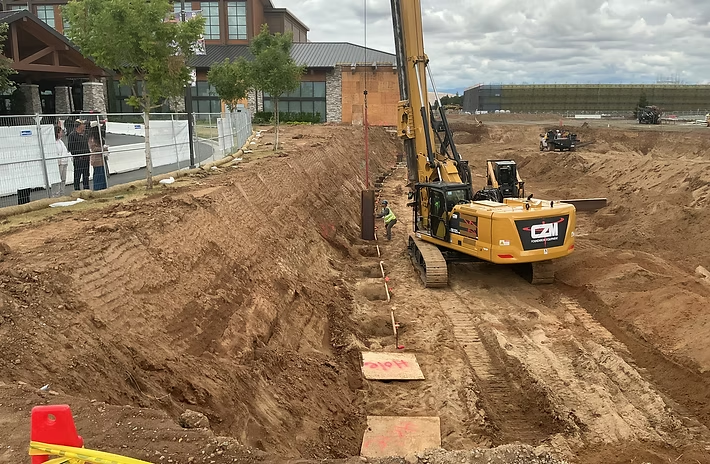
Operating on a corporate scale requires heavy machinery. Cranes, concrete pump trucks, and large excavators are common on these job sites. Crew members must hold specialized certifications to operate this equipment safely.

Residential sites rarely require such massive machinery. The tools are smaller, quieter, and more localized. This contrast highlights the immense operational difference between the two fields.

Regulatory Codes for Commercial Contracting Services

Zoning laws and building codes are much stricter for public spaces. Buildings must include specific fire suppression systems, emergency exits, and ADA-compliant access routes. Failing to meet these codes results in massive legal fines.

Residential codes focus primarily on basic safety and energy efficiency. While important, they do not match the complexity of commercial regulations. Navigating corporate compliance requires deep industry experience.

Project Management and Documentation

Corporate builds involve massive amounts of paperwork. From environmental impact studies to detailed architectural submittals, documentation must be flawless. Dedicated project managers handle this paperwork full-time to maintain compliance.

Residential jobs rely on simpler contracts and fewer administrative layers. The communication is often directly between the homeowner and the builder. Commercial projects involve boards, investors, and municipal committees.

Specialized Roof Requirements in Commercial Contracting Services

The roof of a business facility looks nothing like a house roof. Business structures usually feature massive, flat expanses requiring specialized water drainage systems. These systems must handle thousands of gallons of rainwater efficiently.

For business owners in California, finding specialized local support is essential. Licensed roofers serving Long Beach and the surrounding areas offer free estimates, great warranties, and more to protect these large expanses.

Materials and Longevity

Flat roofs utilize advanced single-ply membranes rather than traditional asphalt shingles. These materials resist chemical exposure, high winds, and intense UV rays. Proper installation requires specialized welding tools and techniques.

When done correctly, these roofs last for multiple decades. They provide a stable foundation for heavy rooftop HVAC units. Choosing the right material saves thousands in future maintenance costs.

Budgeting and Financial Structures

Commercial financing involves corporate loans, investor capital, and strict draw schedules. Builders must present detailed cost breakdowns before funds are released. This requires meticulous accounting practices.

Residential projects often use simple construction loans or personal savings. The financial stakes are lower, and the payment structures are more flexible. Corporate builds demand absolute financial transparency and rigidity.

Conclusion

Hiring the wrong specialist can lead to structural failure and legal nightmares. For corporate properties, you need a team that understands large-scale engineering and strict municipal codes. Trusting certified Commercial Contracting Services guarantees your commercial project is executed with professional precision.