


Keeping a kitchen clean involves more than just washing flat floors and walls. The joint where your floor meets the wall is a common place for water, food scraps, and grease to hide if it is not sealed properly.
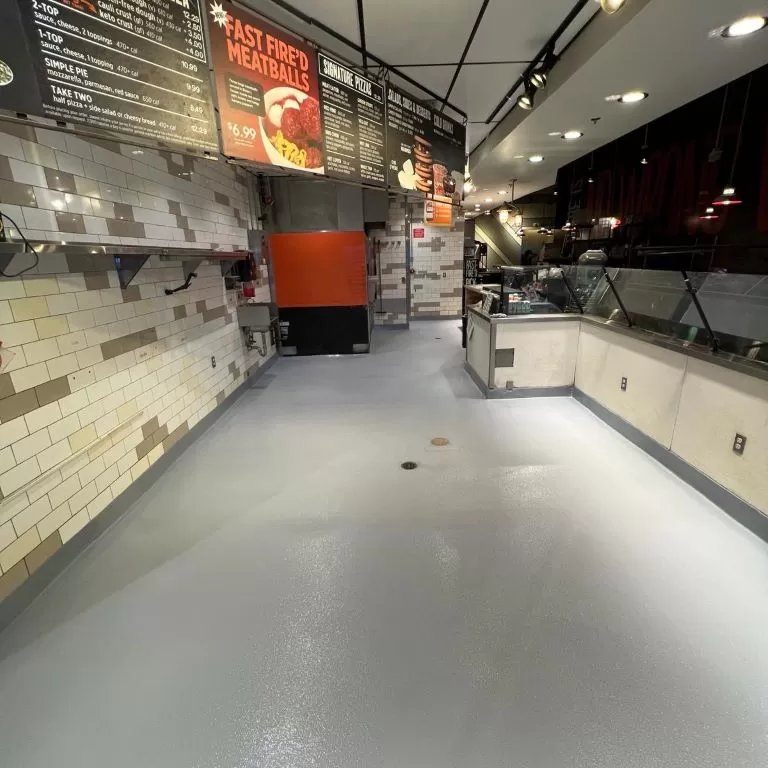
Adding an integrated cove base creates a continuous curve between the floor and wall that keeps water out and makes cleaning simple.
The Risks of Sharp 90-Degree Floor Joints
Standard baseboards or straight 90-degree floor joints leave tiny gaps that catch grease, water, and food crumbs. Mop strings cannot get deep into sharp corners, leaving dirt behind that attracts pests and causes lingering odors.
Installing seamless Epoxy flooring for commercial kitchen options with built-in wall coving rounds out those sharp corners, making it easy to sweep away dirt during daily washdowns.
Keeping Water out of Drywall and Wall Framing
During nightly washdowns, hose water sprayed against lower walls can seep behind drywall or metal panels if floor joints are not sealed tightly. Moisture trapped inside walls leads to hidden mold and rotting studs.
Using a continuous commercial kitchen flooring system directs water straight down off the walls and into your floor drains without touching wall framing.
Meeting Local Health Department Rules
Health inspectors look closely at baseboards during routine visits. Cracked rubber baseboards or peeling caulk lines are common reasons for inspectors to write up health code violations.
Using durable industrial kitchen flooring with integrated coving satisfies health codes and gives inspectors complete confidence in your sanitation standards.
Creating a Sealed Room for Maximum Hygiene
Integrated cove bases are a simple way to keep your kitchen hygienic. Sealing floor-to-wall joints stops moisture leaks, speeds up nightly cleaning, and keeps your facility fully compliant.