
Home Blog Page 2

Epoxy vs. Tile vs. Vinyl: Which Floor Actually Wins in a Commercial Kitchen?

Choosing the right material for your commercial kitchen floor means understanding how each option actually performs under real kitchen conditions, not just how it looks in a product brochure. Food service operators in New Jersey have several flooring options presented to them by contractors and suppliers. Some of those options are genuinely suitable for a commercial kitchen. Others seem practical on paper but fall apart quickly once they meet the realities of daily kitchen use.

How Does Tile Perform in a Commercial Kitchen?

Tile is the most traditional choice for commercial kitchen floors, and there are historical reasons for that. Ceramic and quarry tile are durable materials, resistant to many forms of damage, and easy to replace one piece at a time when individual tiles crack. But the traditional tile-and-grout approach has a fundamental design flaw that becomes increasingly problematic in a commercial kitchen environment over time.

The problem isn’t the tile. It’s the grout. Grout is inherently porous and absorbs bacteria, grease, moisture, and food particles regardless of how aggressively it’s cleaned. Under thermal stress from cooking operations, grout cracks. When it cracks, it creates pathways for moisture to reach the substrate below the tile, which eventually compromises the adhesion of the tile itself. Cracked grout also creates trip hazards as tiles shift and edges become uneven. For any operator seriously evaluating commercial kitchen flooring solutions, the grout problem is the reason tile keeps falling short of what a professional kitchen actually needs.

What About Vinyl Sheet Flooring?

Vinyl sheet flooring is often marketed to smaller food service operations as a cost-effective alternative to tile. It installs faster, has no grout joints, and comes in a variety of designs. Under light commercial use, it can perform adequately for a few years. Under real commercial kitchen conditions, it typically doesn’t.

The core problem with vinyl sheet flooring in a commercial kitchen is that it isn’t designed for the thermal and chemical exposure that professional kitchens generate. Repeated hot water contact causes the vinyl to soften and deform at the seams over time. Industrial sanitizing chemicals can break down the surface, making it sticky and difficult to clean effectively. Heavy rolling equipment creates depressions and tears. And once the seams between vinyl sheets start to peel, you have a moisture intrusion problem very similar to the grout issue in tile, just faster developing and harder to repair cleanly.

Why Is Bare Concrete Not Acceptable?

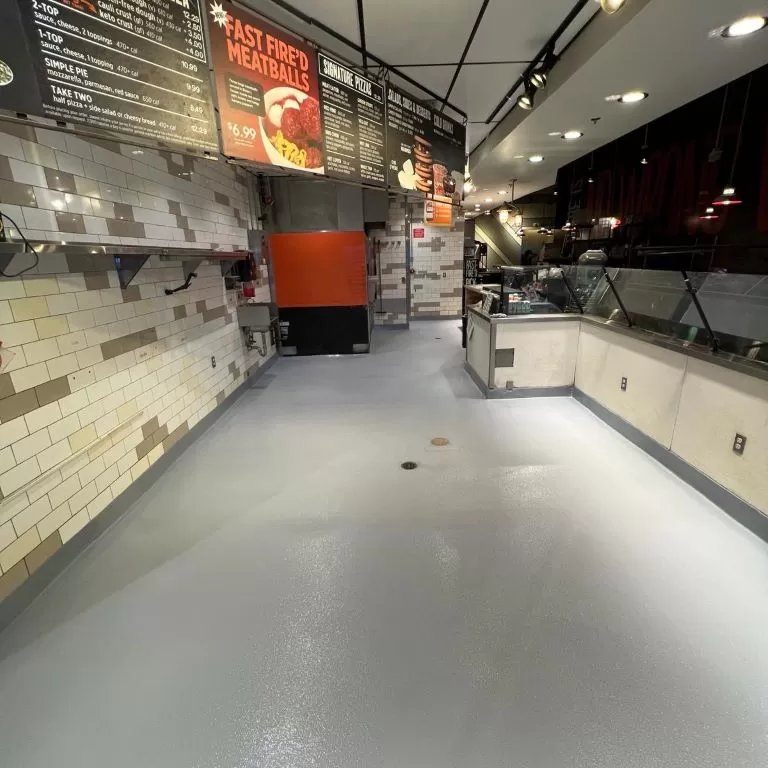
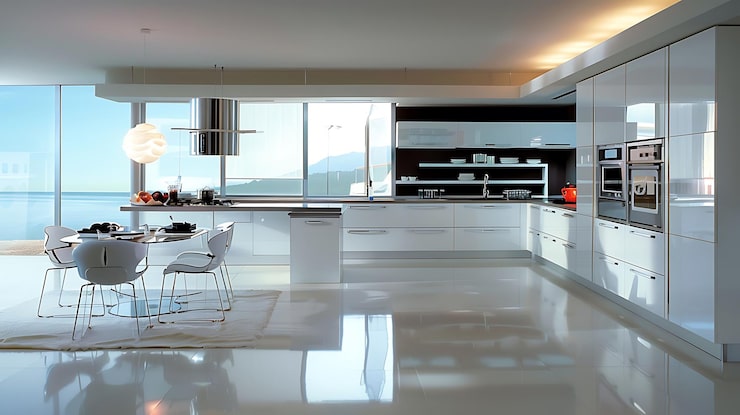
Commercial kitchen flooring

Some operators assume that bare concrete is a simple, durable baseline that avoids the problems of tile and vinyl. In a commercial kitchen, this assumption is incorrect. Concrete is highly porous in its untreated state. It absorbs grease, fats, cooking oils, and the moisture that carries bacteria into the surface structure. Untreated concrete cannot be adequately cleaned to meet health inspection standards, and it cannot resist the chemical sanitizers applied to it during routine cleaning.

Concrete also dusts under traffic, creating particles that contaminate food preparation areas. It provides no slip resistance unless treated, and those treatments are surface applications that wear away. Any commercial kitchen operating on untreated concrete is operating with a floor that fails health standards on multiple grounds.

How Does Epoxy Address All of These Problems?

Epoxy and urethane resin systems solve the problems that tile, vinyl, and bare concrete all create in different ways. The seamless installation eliminates grout joints and vinyl seams, removing the pathways for bacterial accumulation and moisture intrusion. The non-porous cured surface resists absorption of grease, fats, bacteria, and moisture. The chemical formulation withstands the sanitizers and degreasers used in professional kitchens without degrading the surface. And the broadcast aggregate embedded in the slurry phase creates built-in slip resistance that doesn’t wear away.

For operators researching commercial kitchen flooring NJ solutions that genuinely address every one of these performance requirements, professionally installed epoxy systems from an experienced contractor meet the standard that tile, vinyl, and concrete simply can’t consistently achieve. HPS Flooring has been demonstrating this in commercial kitchens across the region since 1988.

Is Epoxy More Expensive Than the Alternatives?

The upfront installation cost of an epoxy system is generally higher than tile or vinyl. That’s a straightforward fact. The relevant question isn’t which option costs more on day one. It’s which option costs less over five, ten, and fifteen years of actual use in a commercial kitchen environment.

When you factor in regrouting costs, tile replacement, vinyl seam repair, the labor time to clean grout-filled joints versus a seamless epoxy surface, and the downtime cost of unplanned floor repairs, the total cost of ownership for epoxy consistently compares favorably against tile and vinyl over a realistic service life. HPS Flooring’s free consultation helps kitchen operators work through this comparison for their specific situation.

Conclusion

The comparison between epoxy, tile, vinyl, and concrete in a commercial kitchen environment isn’t particularly close when you evaluate performance honestly. Tile fails at the grout. Vinyl fails at the seams and under thermal and chemical stress. Concrete fails on porosity and cleanability. Epoxy, properly installed by experienced professionals, addresses every one of these failure points with a single system that’s seamless, chemically resistant, slip-resistant, and built to last for years under real commercial kitchen conditions.

FAQ

Why do grout joints cause problems in commercial kitchens? Grout is porous and absorbs bacteria, grease, and moisture. Under thermal stress, it cracks, allowing moisture to reach the substrate and compromising tile adhesion. A seamless epoxy surface eliminates this vulnerability entirely.

Can vinyl sheet flooring meet commercial kitchen health standards? Vinyl sheet flooring typically doesn’t hold up under the thermal, chemical, and heavy traffic conditions of a commercial kitchen. Its seams degrade over time, creating the same moisture intrusion problems as grout joints in tile.

Does epoxy cost more than tile or vinyl upfront? Yes, the initial installation cost is higher. However, reduced maintenance costs, longer service life, and eliminated repair downtime make epoxy more cost-effective than tile or vinyl over a realistic commercial kitchen service life.

How Paver Sealing and Exterior Cleaning Add Value

A well-maintained exterior can significantly improve the appearance, safety, and value of any property. Outdoor spaces such as patios, driveways, walkways, and pool decks are constantly exposed to sunlight, moisture, dirt, and heavy foot traffic. Over time, these conditions can lead to fading, stains, algae growth, and surface damage. Regular Paver sealing and exterior cleaning help protect these outdoor areas while keeping them clean and visually appealing throughout the year.

Many homeowners focus primarily on interior improvements and overlook the importance of maintaining outdoor surfaces. However, neglected pavers and dirty exterior areas can quickly reduce curb appeal and create long-term maintenance issues. Professional cleaning and sealing services help preserve the condition of outdoor materials while creating a more inviting environment for family members and guests.

Understanding the value of routine exterior maintenance can help homeowners avoid costly repairs and enjoy longer-lasting outdoor spaces.

Why Exterior Maintenance Matters

Outdoor surfaces experience constant exposure to environmental conditions such as rain, humidity, ultraviolet rays, dirt, leaves, and pollution. These elements gradually weaken surfaces and contribute to discoloration, staining, and deterioration.

Pavers are especially vulnerable because water and debris can settle between joints and cause erosion over time. Without sealing, outdoor surfaces may crack, shift, or lose their original color.

Routine cleaning and sealing protect surfaces from these problems while preserving the beauty and functionality of outdoor living areas.

Benefits of Paver Sealing

Protects Against Water Penetration

Paver sealing creates a protective barrier that helps prevent water from soaking into the surface. Moisture can weaken pavers over time and increase the risk of cracks and erosion.

Sealed pavers remain stronger and more durable during changing weather conditions.

Enhances Surface Appearance

Sealing helps restore and enhance the natural color of pavers. The surface appears cleaner, richer, and more polished after sealing.

This improved appearance contributes to better curb appeal and a more attractive property overall.

Prevents Stains

Oil, dirt, rust, and food spills can stain unsealed pavers quickly. A protective sealant makes surfaces easier to clean by preventing contaminants from penetrating deeply into the material.

Routine maintenance becomes faster and more effective with sealed surfaces.

Reduces Weed Growth

Weeds and moss often grow between paver joints when moisture and dirt accumulate. Sealing stabilizes joint sand and helps minimize unwanted growth.

This creates a cleaner and more uniform appearance across patios and walkways.

Importance of Exterior Cleaning

Removes Mold and Algae

Outdoor surfaces frequently develop mold, mildew, and algae due to humidity and moisture exposure. These contaminants create dark stains and slippery conditions.

Professional cleaning removes buildup safely and restores the appearance of outdoor areas.

Improves Safety Around the Property

Algae-covered patios and walkways can become slippery and hazardous. Regular cleaning helps reduce the risk of falls and creates a safer outdoor environment.

Extends the Lifespan of Outdoor Surfaces

Dirt and moisture trapped on surfaces can slowly weaken pavers, concrete, and siding. Routine maintenance helps preserve these materials and reduces the need for expensive repairs.

Boosts Property Value

Clean and well-maintained outdoor spaces make a strong first impression. Properties with attractive exteriors are more likely to maintain higher market value and attract potential buyers.

Areas That Benefit Most From Exterior Cleaning

Driveways

Driveways collect oil stains, tire marks, dirt, and algae over time. Professional cleaning restores brightness and improves curb appeal.

Patios and Walkways

Patios and walkways experience heavy foot traffic and constant weather exposure. Cleaning keeps these areas cleaner, safer, and more attractive.

Pool Areas

Pool decks and enclosures are highly exposed to moisture and humidity. Many homeowners combine Pool cage cleaning with patio and deck maintenance to improve the appearance of the entire outdoor space.

Exterior Walls and Fences

Walls and fences accumulate mildew, dirt, and environmental stains over time. Cleaning helps restore appearance while protecting surfaces from long-term wear.

Why Professional Services Are Recommended

Proper Cleaning Techniques

Different outdoor materials require different cleaning methods. Using incorrect pressure levels or harsh chemicals may damage surfaces.

Professional technicians understand how to clean and seal surfaces safely and effectively.

High-Quality Equipment

Professional cleaning companies use advanced tools and specialized sealing products that provide deeper cleaning and longer-lasting protection.

Saves Time and Effort

Cleaning and sealing outdoor areas can be physically demanding and time-consuming. Hiring professionals allows homeowners to achieve better results without the stress of handling the work themselves.

Long-Lasting Protection

Professional sealing applications provide more consistent coverage and durability than basic do-it-yourself methods.

Experienced technicians can also recommend maintenance schedules based on climate and property conditions.

Problems Caused by Neglected Outdoor Surfaces

Paver sealing and exterior cleaning

Cracking and Erosion

Moisture penetration weakens pavers and concrete over time, increasing the risk of cracks and surface damage.

Fading and Discoloration

Ultraviolet rays and dirt buildup gradually fade outdoor surfaces and reduce their visual appeal.

Weed and Moss Growth

Unsealed joints create the ideal environment for weed and moss growth that affects both appearance and stability.

Permanent Stains

Oil, rust, and organic buildup become harder to remove when maintenance is delayed for long periods.

How Often Should Pavers Be Sealed and Cleaned?

Most paver surfaces should be sealed every two to three years depending on environmental conditions and traffic levels.

Exterior cleaning is typically recommended once or twice each year to prevent heavy buildup and maintain appearance.

Homes in humid climates or areas with frequent storms may require more regular maintenance due to increased moisture exposure.

Conclusion

Paver sealing and exterior cleaning are essential for maintaining clean, attractive, and durable outdoor spaces. Routine maintenance protects surfaces from stains, moisture, algae, and long-term deterioration while improving safety and curb appeal.

From patios and walkways to driveways and pool areas, professional cleaning and sealing services help preserve property value and extend the lifespan of outdoor materials. Investing in regular maintenance allows homeowners to enjoy beautiful and functional outdoor spaces for years to come.

FAQ

How often should pavers be professionally sealed?

Most pavers should be sealed every two to three years depending on weather conditions and surface usage.

Can exterior cleaning remove deep stains from patios and driveways?

Yes, professional cleaning services can remove many deep stains caused by algae, dirt, oil, and mildew buildup.

Does sealing help prevent weeds between pavers?

Yes, sealing helps stabilize joint sand and reduces moisture penetration, which helps limit weed growth between pavers.

Roofing Contractor McAllen for Long-Lasting Roof Protection

A strong roof is one of the most important parts of any property because it protects your home from weather damage, moisture, and structural issues. Many homeowners do not notice roofing problems until leaks or visible damage begin affecting the inside of the house. Unfortunately, waiting too long to address roofing concerns can result in expensive repairs and major property damage.

Choosing a trusted Roofing contractor McAllen homeowners rely on is essential for maintaining a durable and reliable roofing system. Professional roofing services help identify issues early, improve energy efficiency, and extend the lifespan of your roof. Whether you need maintenance, repairs, or a complete roof replacement, experienced roofers can provide solutions designed for long-term performance and safety.

Why Roofing Maintenance Matters

Routine roof maintenance plays a major role in protecting your property and preventing unexpected repair costs. Roofs constantly face exposure to heat, rain, wind, and debris, which gradually wear down roofing materials over time.

Regular inspections help identify minor problems before they become serious structural concerns. Issues such as cracked shingles, damaged flashing, clogged gutters, and hidden leaks can often be repaired quickly when discovered early.Homeowners who invest in preventative roofing care usually spend less on long-term repairs compared to those who wait for visible damage to appear. Proper maintenance also improves the overall appearance and value of a property.

Common Roofing Problems Homeowners Experience

Roofing systems can develop several issues due to weather conditions, aging materials, or poor installation practices. Understanding the warning signs helps homeowners know when to contact roofing professionals.

Roof Leaks

Leaks are among the most common roofing problems. Water entering through damaged areas can harm ceilings, insulation, walls, and flooring. If left untreated, leaks may also lead to mold growth and structural weakening.

Damaged Shingles

Shingles protect the roof from outdoor elements. Over time, they may crack, curl, loosen, or fall off due to strong winds and prolonged weather exposure.Improper ventilation traps heat and moisture inside the attic. This can shorten the lifespan of roofing materials while increasing cooling costs during warmer months.Heavy storms often cause hidden roofing damage that may not be immediately visible. Missing shingles, damaged flashing, and weakened roofing materials are common after severe weather events.

Benefits of Hiring Professional Roofing Contractors

Professional roofing services provide homeowners with reliable solutions and long-term value that temporary repairs often cannot achieve.Experienced roofers know how to identify hidden roofing problems that homeowners may overlook. Detailed inspections help prevent future structural damage.

High-Quality Roofing Materials

Professional roofing companies use durable materials designed to handle local climate conditions. Quality materials improve roof performance and longevity.Roofing work involves safety risks without proper equipment or training. Professional roofing crews follow safety procedures to complete projects efficiently and securely.

Investing in professional roofing services often saves money over time by reducing the need for repeated repairs and emergency restoration work.Selecting the right roofing material depends on factors such as budget, climate, and property design. Professional roofers help homeowners compare options to find the best fit for their needs.Asphalt shingles are one of the most popular roofing materials because they are affordable, durable, and available in many styles and colors.

Metal Roofing

Metal roofs offer excellent durability and energy efficiency. They are resistant to severe weather and can last for decades with proper maintenance.Tile roofs provide a stylish appearance and impressive longevity. They are especially effective in warm climates because they resist heat effectively.

Roofing contractor McAllen

Flat Roofing Systems

Flat roofs are commonly used on commercial buildings and modern residential properties. Proper installation and drainage are important for preventing water buildup.

Some roofing problems are easy to identify, while others develop slowly over time. Homeowners should pay attention to warning signs that indicate professional repairs may be necessary.Brown stains inside the home often suggest roof leaks that require immediate attention.A sagging roof may indicate moisture damage or weakened structural components.Unexpected increases in utility costs may result from poor roof insulation or ventilation problems.Granules collecting in gutters usually indicate aging or deteriorating shingles.Homeowners searching for dependable Roof repair McAllen services should address these issues quickly to prevent larger structural problems and costly repairs.

How Roofing Impacts Energy Efficiency

A properly maintained roof helps regulate indoor temperatures and improve overall energy efficiency. Damaged roofing systems often allow heat to enter the home during warmer seasons and let cooled air escape.

Modern roofing materials and ventilation systems help reduce strain on heating and cooling equipment. This can lower monthly utility costs and create a more comfortable living environment.Proper insulation also prevents excess moisture buildup in the attic, reducing the risk of mold and water damage.

The Importance of Roof Inspections After Storms

Storms can create hidden roofing damage that may not be visible from the ground. Strong winds, heavy rain, and hail often weaken roofing materials or loosen shingles.Scheduling a professional inspection after severe weather helps identify problems early and prevents additional damage from developing. Roofing experts can assess the condition of flashing, gutters, shingles, and structural components to ensure the roof remains secure.Early storm damage detection often reduces repair costs and extends the lifespan of the roof.

Why Homeowners Trust Experienced Roofing Professionals

Reliable roofing companies focus on quality workmanship, customer satisfaction, and long-term results. Experienced roofers understand local weather conditions and use proven installation methods to improve roof durability.

Professional contractors also provide transparent pricing, detailed inspections, and expert recommendations tailored to each property’s needs. Whether homeowners require repairs or complete roof replacement, working with experienced roofing professionals ensures the project is completed correctly.

Conclusion

Your roof is one of the most valuable parts of your home because it protects your family, belongings, and property from outdoor elements. Ignoring roofing problems can lead to expensive repairs, water damage, and reduced energy efficiency.

Professional roofing services help homeowners maintain safe, durable, and long-lasting roofing systems. Regular inspections, preventative maintenance, and timely repairs are essential for protecting your investment and avoiding major structural problems in the future.

FAQ

How often should a roof be professionally inspected?

Most experts recommend professional roof inspections at least once or twice per year, especially after major storms.

What causes roof leaks most often?

Common causes include damaged shingles, cracked flashing, clogged gutters, and aging roofing materials.

Can roof maintenance improve energy efficiency?

Yes. Proper maintenance improves insulation and ventilation, helping reduce energy costs and maintain indoor comfort.

Your Furniture Is Polluting Your Home — And Most Brands Won’t Tell You

What’s Actually Inside Most Furniture 

Most furniture sold at everyday price points is built from MDF or particle board — engineered wood products bonded with urea-formaldehyde resin. Formaldehyde is a known human carcinogen. It doesn’t stay locked inside the material. It off-gases continuously at room temperature, for years after the piece was made, and the rate climbs with heat and humidity. 

The VOCs — volatile organic compounds including benzene and toluene — come from the lacquers and synthetic finishes applied to the surface. Some are relatively harmless. Others are linked to respiratory and neurological effects with prolonged exposure. 

Here’s what catches most people off guard: that “new furniture smell” is formaldehyde and VOC off-gassing. It fades from awareness before it stops occurring. The furniture industry has no legal obligation to tell you any of this — a piece can be labeled “wood furniture” while being made entirely from formaldehyde-saturated particle board. 

The Two Rooms That Deserve the Most Attention 

Bedrooms come first. You spend seven to nine hours there every night, in a closed room, breathing air that circulates around whatever your furniture is made from. That’s not occasional exposure — it’s continuous, nightly, for years. 

non toxic bed frame built from solid hardwood with a formaldehyde-free finish eliminates that variable entirely. No resin binders. No synthetic coatings off-gassing while you sleep. For children especially — whose lungs and immune systems are still developing — american made bedroom furniture built to a clean material standard isn’t a luxury. It’s the baseline worth holding to. 

Dining rooms matter differently. You’re not there for eight hours, but children sit close to the table surface for extended periods, often at floor level where heavier particles settle. A french country dining room table

non toxic furniture
non toxic furniture

 built from solid oak or walnut — properly kiln-dried, finished with hardwax oil or a water-based coating — brings the warmth and character the style is known for, with none of the chemical tradeoffs a flat-pack alternative brings into your home. 

The best wood for a dining table is solid hardwood. Not because it photographs better. Because it doesn’t need resin to hold together. 

What Non Toxic Actually Means 

Two things define a genuinely non toxic piece: the core material and the finish. 

The material should be solid hardwood throughout. Not “solid wood construction” — a phrase that legally permits MDF panels inside a solid wood frame. Not “engineered wood” — a polished term for compressed fiber bonded with resin. Solid hardwood is cut directly from timber, kiln-dried to the right moisture content, and held together with traditional joinery. No chemistry required to make it structurally sound. 

The finish should be water-based or hardwax oil. These sit at the low end of VOC output. Hardwax oil penetrates the wood surface rather than sitting on top of it, which means it doesn’t crack, peel, or trap compounds against the material over time. 

Formaldehyde free furniture solves one part of the problem. Non toxic furniture solves both. A piece can skip the urea-formaldehyde resin and still carry a VOC-heavy lacquer finish — which is why both material and finish need to meet the standard. 

Conclusion

The furniture in your home is either working for your family or quietly working against them. Non toxic furniture built from solid hardwood removes that question from the equation — and the pieces built to that standard are ones you buy once, place in your home, and stop thinking about entirely.

Wood Fence Sealer: The Ultimate Guide to Protecting and Beautifying Your Fence

Let’s be honest — most people do not think about their wooden fence until something goes wrong. Maybe you notice the boards are starting to grey out, or a plank has cracked down the middle after a rough winter. The truth is, wood fences need consistent care, and the single most important thing you can do is find a reliable wood fence sealer before the damage starts showing up.

This guide walks you through everything you need to know, from why sealing matters to the best way to stain a fence like someone who actually knows what they are doing.

What Happens When You Skip the Sealer

Picture this. You spend a weekend putting up a beautiful cedar fence. It looks incredible. Fast forward two years and the boards have turned an ashy grey, some are starting to warp, and there is a suspicious green tinge forming at the base near the soil. That is what happens when wood is left completely exposed to the elements.

Wood is a natural material, which means it breathes. It pulls in moisture when it rains and pushes it back out when the sun comes out. That constant back and forth causes the fibers to swell and shrink repeatedly, and over time the wood simply gives up. It cracks, splits, and warps. Mold and mildew find their way into those cracks, and before long you are looking at a fence that needs full replacement rather than simple maintenance.

A good wood fence sealer puts a stop to that cycle. It forms a barrier on and within the wood surface that keeps excessive moisture out, blocks UV damage, and prevents mold from taking hold. Think of it as sunscreen and a raincoat combined, but for your fence.

Breaking Down the Different Types of Sealers

Walking into a hardware store and staring at a wall of wood sealers can feel overwhelming. Here is a simple breakdown to make that decision easier.

Water Based Sealers are popular for good reason. They dry fast, they do not smell terrible, and cleanup is as simple as rinsing your brush under a tap. They work well in most climates and are a solid choice for newer fences in decent condition. Many homeowners prefer them because they are more environmentally friendly than solvent heavy alternatives.

Oil Based Sealers go deeper. They penetrate the wood fibers rather than just sitting on the surface, which makes them a better pick for older, thirstier wood. The tradeoff is longer drying time and a stronger smell during application. But if your fence boards are looking dry and neglected, oil based sealers give them the kind of deep nourishment they actually need.

Clear Sealers let the natural wood speak for itself. If you love the warm tones of cedar or the rich grain of redwood, a clear sealer protects without covering anything up. Your fence keeps its original look while staying shielded from rain and sun.

Tinted Sealers and Stain Sealers do double duty. They add color while also sealing the surface, which leads naturally into the next topic every fence owner should understand.

The Best Way to Stain a Fence Without Making a Mess of It

A lot of people jump straight into staining without any prep and then wonder why the result looks patchy and fades within a year. The best way to stain a fence is less about the staining itself and more about everything that comes before it.

Start with a thorough clean. Grab a pressure washer or a stiff bristle brush with a wood cleaning solution and go over every board. Dirt, algae, and old flaking finish all prevent new stain from bonding properly. Once the fence is clean, give it a full day or two to dry out completely. Staining over damp wood is one of the most common mistakes people make.

Check for rough spots. After washing, some boards might have raised grain or rough patches. A light sanding smooths those out and gives the stain something even to grab onto.

Pick your moment wisely. Staining on a blazing hot afternoon is asking for trouble. The product dries too quickly and you end up with lap marks and uneven patches. A mild, overcast morning is genuinely ideal. Moderate temperature, no direct sun beating down, and no rain in the forecast for at least 24 hours.

Choose your applicator based on the job. A good quality brush gives you control, especially around post edges and tight corners. A roller speeds things up on wide flat boards. A sprayer covers ground fast but requires you to mask off anything nearby that you do not want stained, including plants, pathways, and the side of your house.

Never skip the second coat. One coat might look fine when wet, but once it dries you will almost always see thin or missed spots. Two coats build proper depth of color and create a much stronger protective layer overall.

Companies focused on outdoor wood care, like Seal It Green, consistently point out that most product failures come down to application errors rather than the product itself. The sealer or stain rarely gets the blame it deserves, but skipping prep work almost always does.

How Long Does a Wood Fence Sealer Actually Last

This depends on a few factors. The climate you live in plays a huge role. Fences in areas with heavy rainfall, intense sun, or freezing winters tend to wear through their sealer faster than those in milder conditions. The type of wood matters too, as denser hardwoods hold sealers longer than softer pine.

Generally speaking, most quality sealers last somewhere between two and five years. The easiest way to test yours is to splash a little water on the fence boards. If the water beads up and rolls off, the sealer is doing its job. If it soaks straight in, it is time to reapply.

Getting into the habit of checking your fence once a year takes about ten minutes and can save you a significant amount of money in repairs or early replacement.

What to Look for When Buying a Sealer

Do not just grab the cheapest option on the shelf. Look for a product that specifically mentions UV protection, water repellency, and resistance to mold and mildew. Check that it is compatible with your wood type, because a sealer formulated for treated pine may not be the right choice for untreated cedar.

Reading reviews from people in climates similar to yours is genuinely useful. Someone in a dry desert region and someone on a rainy coastline are going to have very different experiences with the same product.

Conclusion

Your wooden fence goes through a lot. Rain, sun, humidity, cold snaps, and everything in between take a toll on the wood year after year. But with the right wood fence sealer and a solid understanding of the best way to stain a fence, you can keep it looking sharp and standing strong for a long time.

The process is not complicated. Clean the surface properly, choose a product that suits your wood and climate, apply it carefully, and come back to check on it every year or so. Trusted names in outdoor wood protection, including Seal It Green, have built their reputation on the simple idea that good preparation and quality products make all the difference. Take care of your fence now, and you will not have to worry about replacing it anytime soon.

Cold Air Diffuser vs. Every Other Home Fragrance Method: An Honest Comparison

0

If you are trying to decide where to invest in home fragrance, the number of options can feel overwhelming. Candles, wax melts, ultrasonic diffusers, reed diffusers, room sprays, plug-in fresheners, and then there is the cold air diffuser at the premium end of the spectrum. This comparison will settle the question clearly by examining what each method actually delivers and why cold-air diffusion consistently comes out on top for anyone serious about home fragrance quality.

The short version: cold-air diffusion technology outperforms every alternative on fragrance quality, longevity, coverage, safety, and consistency. The longer version follows.

Candles: Beautiful but Limited

Candles are beloved for good reason. They are visually appealing, create atmosphere through both scent and light, and many premium candles smell genuinely wonderful when freshly lit. But as a home fragrance solution, they have meaningful limitations.

First, heat degrades fragrance compounds. The most delicate and interesting aromatic molecules in a candle burn off before they even reach the air, meaning you never experience the full complexity of the intended fragrance. What you smell is a thermally altered version of what was formulated.

Second, candles cover a limited area. Even a large candle concentrates its fragrance in a relatively small zone around the flame. Filling a room properly requires multiple candles or constant movement.

Third, they require constant attention for safety reasons and produce soot and smoke that can affect air quality and leave deposits on surfaces over time.

Ultrasonic Diffusers: Better but Still Compromised

Ultrasonic diffusers represent a genuine step up from candles for fragrance longevity and coverage. They use water and ultrasonic vibration to create a visible mist that carries fragrance into the room. For many people, they are the first introduction to a more thoughtful approach to home fragrance.

The limitation is that diluting fragrance oil with water significantly reduces the concentration and quality of the scent. What comes out of the mist is weaker, less complex, and less persistent than the oil itself. The visible steam also adds humidity to the room, which is problematic for hardwood floors, electronics, artwork, and humid climates.

Where Cold Air Diffusion Wins Decisively

A quality cold air diffuser addresses every limitation of both candles and ultrasonic diffusers. No heat means fragrance compounds are preserved completely. No water means the fragrance stays concentrated and true to its formulation. The dry nano-particles produced stay airborne far longer than either candle fragrance or ultrasonic mist.

The result is richer fragrance, more even coverage, longer persistence, and a cleaner, safer operation that leaves nothing behind on surfaces or in the air quality of your home.

The Nebulizing Diffuser: The Premium Cold-Air Choice

Within the cold-air diffusion category, the nebulizing diffuser represents the highest performance option. By using pressurized air to create even finer particles than standard cold-air systems, nebulizing diffusers achieve the most even distribution, the longest suspension time, and the most ambient fragrance quality of any available method.

For anyone who has experienced hotel-quality ambient scenting and wants to recreate that at home, a nebulizing diffuser is the closest available technology. The fragrance fills the space completely, maintains its presence evenly from corner to corner, and delivers the full complexity of the oil throughout the entire cycle.

The combination of nebulizing technology with premium fragrance oils formulated for cold-air systems creates an experience that is genuinely indistinguishable from what you would find in a high-end hotel, spa, or luxury commercial environment.

Reed Diffusers and Room Sprays: The Convenience Trade-Off

Reed diffusers and room sprays deserve mention as the lowest-commitment options in the home fragrance category. Reed diffusers deliver a subtle, continuous fragrance from oils that naturally wick up through the reeds and evaporate into the air. Room sprays deliver a quick burst of fragrance as needed.

Both are convenient and accessible, but neither creates the kind of consistent, room-filling fragrance environment that a cold-air or nebulizing system delivers. Reed diffusers are limited in coverage and intensity. Room sprays are temporary by nature, lasting minutes rather than hours.

For anyone who wants home fragrance to be a genuine ambient quality of their space rather than an occasional addition, neither of these options is adequate.

Bringing Hotel-Quality Scenting Home

scent diffuser

The reference point for what premium home fragrance can achieve is the hotel scent diffuser system. Hotels that invest seriously in their fragrance environment use cold-air and nebulizing technology with premium oils to create that signature, omnipresent luxury fragrance that guests remember. This same approach is now fully available for residential use.

Implementing it at home requires:

  • A quality cold-air or nebulizing diffuser appropriate for your space
  • Premium fragrance oils formulated for cold-air systems
  • Thoughtful placement and a consistent daily schedule
  • Ongoing maintenance to keep the system performing optimally

With these elements in place, your home crosses the threshold from pleasantly scented to genuinely exceptional, the kind of ambient luxury fragrance environment that makes an impression on everyone who enters.

Conclusion

When you compare cold air diffuser technology against every other home fragrance method available, the result is definitive. The combination of superior fragrance quality, longer longevity, broader coverage, and cleaner operation makes it the clear choice for anyone serious about the scent environment in their home. Pair it with the premium experience of a nebulizing diffuser and the hotel scent diffuser approach, and you have the finest home fragrance system available at any price point.

The Ultimate Guide to Fence Sealers: How to Protect and Extend the Life of Your Fence

0

Your fence does a lot of quiet, thankless work. It keeps pets in, strangers out, and gives your yard a sense of shape and privacy. But wood, no matter how strong it looks when freshly installed, is constantly under attack from rain, UV rays, humidity, insects, and the slow creep of rot. Most homeowners don’t think about their fence until something is visibly wrong. By then, the damage is already done.

The good news? A quality fence sealer applied at the right time can add years, sometimes decades, to your fence’s life. This guide walks you through everything you need to know: why sealing matters, how to pick the right product, and how to do the job properly.

Why Wood Fences Need Sealing

Wood is a natural, porous material. It breathes. It absorbs moisture when it rains and releases it as temperatures rise. Over time, this constant swelling and shrinking causes the wood fibers to break down. Cracks form. Warping begins. And once moisture finds a way in, mold, mildew, and wood rot follow close behind.

UV exposure compounds the problem. Sunlight degrades the lignin in wood, the compound that gives it structure and color, turning it gray and brittle over time.

A fence sealer creates a protective barrier that slows all of this down. Think of it as sunscreen and a raincoat rolled into one.

Sealer vs. Stain vs. Paint: What’s the Difference?

This is one of the most common points of confusion for homeowners, so it’s worth clearing up before you head to the hardware store.

Sealers are typically clear or lightly tinted. They penetrate the wood and repel water without dramatically changing the appearance. They’re ideal if you want to preserve the natural look of the wood.

Stains add color while also offering some protection. They come in transparent, semi-transparent, and solid varieties. The more opaque the stain, the more coverage, but also the less of the natural grain you’ll see.

Paint offers the most visual coverage and some protection, but it sits on top of the wood rather than penetrating it. When it peels, and it will eventually, moisture can get trapped underneath, which speeds up rot.

For most wood fences, especially cedar, pine, or pressure treated lumber, a penetrating sealer or a combination sealer stain product gives the best balance of protection and aesthetics.

How to Choose the Best Wood Fence Sealer

Not all sealers are created equal. Here’s what to look for when shopping for the best wood fence sealer for your specific situation:

  1. Water Based vs. Oil Based

Oil based sealers penetrate deeper and tend to be more durable, but they take longer to dry and require mineral spirits for cleanup. Water based sealers dry faster, have lower VOC content, and clean up easily with water. For most residential projects, a high quality water based sealer is perfectly sufficient.

  1. UV Protection

Make sure your sealer includes UV inhibitors. Without them, your fence will still gray and fade even if it’s water resistant.

  1. Mold and Mildew Resistance

Look for products that specifically mention mildewcide or fungicide additives. This is especially important in humid climates or shaded areas of your yard where moisture lingers.

  1. Application Method

Some sealers are designed for sprayer application, others for brush or roller. Consider what tools you have available and match the product accordingly.

  1. Eco Friendly Formulas

With growing environmental awareness, several manufacturers, including brands like Seal It Green, have developed plant based and low VOC sealers that perform well without the harsh chemical footprint of traditional oil based products. If you have kids or pets, or simply prefer greener choices, these are worth a close look.

When Should You Seal Your Fence?

Timing matters more than most people realize.

New fences should typically wait 4 to 6 weeks before sealing. Pressure treated wood in particular needs time to dry out fully; if you seal it too soon, the sealer won’t penetrate properly.

Existing fences should be sealed as soon as they start showing signs of dryness or weathering, or proactively, every 2 to 3 years as part of routine maintenance. A simple test: splash a small amount of water on the wood. If it beads up, the existing sealer is still doing its job. If it soaks in immediately, it’s time to reseal.

Seasonally, late spring or early fall tends to be ideal, with mild temperatures, lower humidity, and no risk of freezing. Avoid sealing in direct, blazing sun or when rain is forecast within 24 to 48 hours.

How to Seal Your Fence: Step by Step

Step 1: Clean the Fence Thoroughly

This step is non negotiable. Sealer applied over dirt, mold, or old flaking product won’t bond properly. Use a wood cleaner or brightener and a stiff brush, or rent a pressure washer and keep the pressure moderate, around 1,200 to 1,500 PSI for most wood, to avoid damaging the grain. Let the fence dry completely, at least 48 hours on a dry, sunny stretch.

Step 2: Make Repairs

Inspect the fence carefully. Replace any boards that are cracked beyond repair, tighten loose screws or nails, and fill minor cracks with exterior wood filler. Sealing over damage only preserves the problem.

Step 3: Sand If Needed

For older, weathered fences with rough or raised grain, a light sanding with 80 to 100 grit sandpaper helps the sealer absorb more evenly. Wipe away dust before proceeding.

Step 4: Apply the Sealer

Stir, don’t shake, your sealer well before starting. Apply with a brush, roller, or sprayer, working in the direction of the grain. Be generous but not excessive. You want the wood to absorb the product, not pool on the surface. Pay extra attention to end grain, post tops, and the bottoms of boards near the ground, as these areas are most vulnerable to moisture.

Step 5: Allow Proper Drying Time

Most sealers are dry to the touch within a few hours but need 24 to 48 hours of full cure time before they’re exposed to rain or heavy foot traffic. Check your product’s label, as this varies significantly between formulas.

Step 6: Apply a Second Coat If Recommended

For older, more porous wood or unpainted surfaces being sealed for the first time, a second coat often makes a meaningful difference in protection. Apply once the first coat is no longer tacky but before it’s fully cured. Check the manufacturer’s window, usually 2 to 4 hours for water based products.

Maintenance Tips to Keep Your Fence Looking Great Year Round

Sealing is the foundation, but ongoing care matters too:

Trim vegetation growing against the fence. Leaves and vines trap moisture and block airflow, accelerating decay.

Keep the base clear of soil, mulch, and debris that pile up against the bottom boards.

Inspect annually, ideally in early spring. Look for cracks, soft spots, loose fasteners, or graying wood.

Clean lightly each year with a mild wood safe cleaner to remove mold, algae, and grime before they embed themselves.

Touch up any areas where the sealer has worn thin, particularly around joints and post tops.

Common Mistakes to Avoid

Even experienced DIYers make these errors:

Skipping the cleaning step. It’s tedious, but it’s the most important part.

Sealing wet wood. If there’s any moisture left in the wood, the sealer can’t penetrate and will sit on the surface and peel.

Applying too thick. More isn’t better. Thick coats run, don’t penetrate, and dry unevenly.

Ignoring the post tops. These are ground zero for rot. Cap them or seal them twice.

Using the wrong product for the wood type. Hardwoods, softwoods, and pressure treated lumber all have different porosity levels. Read product labels carefully.

Final Thoughts

A wooden fence is an investment in your property value, your privacy, and the look of your outdoor space. Protecting that investment doesn’t take much: a good fence sealer, a free afternoon, and a consistent maintenance routine every couple of years.

Whether you’re sealing a brand new cedar fence or restoring a weathered pine one, the principles are the same: clean thoroughly, choose a quality product suited to your wood type and climate, apply it carefully, and keep up with it. Brands focused specifically on wood protection, like Seal It Green, which takes an eco conscious approach to wood care, are a good reminder that you don’t have to sacrifice performance for sustainability.

Do it right, and your fence won’t just survive the seasons. It’ll look good doing it.

Transform Your Space with Modern Epoxy Flooring Solutions

0

When it comes to upgrading floors, homeowners and businesses are constantly searching for a solution that blends durability with aesthetics. This is where epoxy flooring nj services are making a significant impact. Known for their sleek finish, long lifespan, and resistance to wear and tear, epoxy floors are becoming a top choice across residential, commercial, and industrial spaces.Unlike traditional flooring options, epoxy offers a seamless surface that is not only visually appealing but also incredibly easy to maintain. Whether you are renovating your garage or modernizing a commercial space, epoxy flooring delivers unmatched performance.

Why Epoxy Flooring is Gaining Popularity

Epoxy flooring has grown in popularity due to its ability to withstand heavy usage without losing its shine or structure. The installation process involves applying a resin-based coating over concrete surfaces, creating a tough and glossy finish.One of the key reasons behind its demand is its adaptability. From homes to warehouses, epoxy floors are versatile enough to suit different environments. In addition, they are resistant to chemicals, stains, and moisture, making them ideal for long-term use.

Benefits of Choosing Epoxy Flooring NJ

Choosing epoxy flooring nj services ensures you get a flooring solution that is both functional and visually appealing. The benefits go beyond just appearance.

Epoxy floors are highly durable and can last for years without requiring major repairs. They also enhance safety by offering slip-resistant coatings. Another advantage is their low maintenance, as the smooth surface prevents dust and dirt accumulation.Epoxy flooring provides excellent resistance to heavy traffic, making it ideal for garages, factories, and commercial buildings.

Applications of Epoxy Flooring in Modern Spaces

Epoxy flooring is not limited to one type of space. It has become a popular option for various applications due to its strength and flexibility.In residential areas, epoxy is commonly used in garages, basements, and kitchens. For commercial spaces, it enhances the professional appearance while ensuring durability. Industrial facilities benefit the most due to its ability to handle machinery and chemical exposure.

epoxy flooring nj

How Epoxy Flooring New Jersey Enhances Property Value

Understanding Epoxy Flooring New Jersey Solutions

Investing in epoxy flooring new jersey services can significantly increase the value of your property. Potential buyers often look for features that require minimal maintenance and offer long-term benefits, and epoxy flooring checks both boxes.The glossy and modern finish instantly elevates the visual appeal of any space. Moreover, its durability ensures that the floor remains in excellent condition for years, reducing the need for future repairs.

Installation Process and What to Expect

The installation of epoxy flooring involves multiple steps to ensure a flawless finish. It begins with preparing the concrete surface, followed by applying the epoxy resin and hardener.Professionals ensure that each layer is applied evenly to avoid imperfections. The curing process is crucial, as it determines the strength and durability of the floor.

Maintenance Tips for Long-Lasting Results

Maintaining epoxy flooring is relatively simple compared to other flooring options. Regular cleaning with mild solutions helps preserve its shine.Avoid using harsh chemicals that may damage the surface. With proper care, epoxy floors can maintain their appearance and functionality for many years.

Conclusion

Epoxy flooring has emerged as a reliable and stylish solution for modern spaces. Its durability, versatility, and aesthetic appeal make it a preferred choice for both residential and commercial properties. By choosing professional epoxy flooring nj services, you ensure a long-lasting investment that enhances both functionality and value.

Luxury Custom Homes: Crafting Timeless Living Spaces with Boston Construct, LLC

0

Creating Luxury custom homes is more than just building a house—it’s about designing a personalized sanctuary that reflects your lifestyle, taste, and long-term vision. At Boston Construct, LLC, the art of crafting high-end living spaces has been perfected through decades of experience in home renovations, custom additions, and seamless expansions throughout Greater Boston. Since 2002, the company has helped homeowners transform ordinary properties into extraordinary residences that combine elegance, comfort, and functionality. 

What Defines Luxury Custom Homes? 

Luxury custom homes are distinguished by their attention to detail, superior craftsmanship, and personalized design. Unlike standard homes, these properties are built around the homeowner’s specific needs and desires. Every element—from architectural layout to interior finishes—is carefully curated to create a cohesive and sophisticated environment. 

Boston Construct, LLC takes pride in delivering homes that go beyond aesthetics. Their projects emphasize smart layouts, energy efficiency, and high-end materials, ensuring each home stands the test of time while maintaining a modern and luxurious appeal. 

Personalized Design for Modern Living 

A defining feature of Luxury custom homes is customization. Boston Construct works closely with clients to understand their lifestyle preferences, whether it’s open-concept living spaces, spa-inspired bathrooms, or gourmet kitchens designed for entertaining. 

Their team ensures that every design element aligns with the homeowner’s vision. From selecting premium flooring and cabinetry to incorporating smart home technology, each decision contributes to a space that feels both functional and refined. 

Luxury custom homes
Luxury custom homes

By focusing on personalization, Boston Construct creates homes that are not only visually stunning but also highly practical for everyday living. 

Seamless Integration with Existing Spaces 

For homeowners looking to upgrade rather than relocate, Boston Construct specializes in blending new additions with existing structures. This approach is ideal for expanding into Luxury custom homes without sacrificing the character of your current property. 

Whether it’s a second-story addition, an extended living area, or a custom-built wing, their team ensures architectural consistency. The result is a seamless transition between old and new, enhancing both the value and usability of the home. 

High-End Renovations that Elevate Living 

Luxury isn’t always about building from scratch. Boston Construct also excels in transforming existing homes into Luxury custom homes through comprehensive renovations. 

Their services include: 

  • Full home renovations  
  • Kitchen remodeling with premium finishes  
  • Bathroom upgrades featuring modern fixtures and spa-like features  
  • Whole-house updates that improve layout and functionality  

Each renovation project is approached with the same level of precision and care as a new build, ensuring exceptional results that align with luxury standards. 

Quality Craftsmanship You Can Trust 

One of the most important aspects of Luxury custom homes is craftsmanship. Boston Construct, LLC brings decades of hands-on experience and a commitment to excellence in every project. 

Their skilled professionals use high-quality materials and proven construction techniques to deliver durable and visually impressive results. Attention to detail is evident in every corner—from intricate woodwork to flawless finishes—ensuring that each home meets the highest expectations. 

Enhancing Property Value and Lifestyle 

Investing in Luxury custom homes offers more than just aesthetic appeal—it significantly increases property value while improving overall quality of life. 

A well-designed custom home provides: 

  • Enhanced comfort and functionality  
  • Better use of space  
  • Modern amenities tailored to your needs  
  • Increased resale value  

Boston Construct understands the importance of balancing luxury with practicality, creating homes that are both beautiful and smart investments. 

Serving Greater Boston with Excellence 

Boston Construct, LLC proudly serves homeowners across Boston, Newton, Wellesley, Needham, Belmont, and Winchester. Their deep understanding of local architecture and building standards allows them to deliver projects that blend seamlessly into the surrounding neighborhoods while standing out for their elegance and quality. 

Their reputation as a trusted renovation and custom home expert has been built on years of successful projects and satisfied clients. 

A Seamless Building Experience 

Building or renovating Luxury custom homes can feel overwhelming, but Boston Construct ensures a smooth and stress-free process. From initial consultation to final walkthrough, their team manages every aspect of the project with professionalism and transparency. 

Clients benefit from: 

  • Clear communication throughout the project  
  • Detailed planning and timelines  
  • Expert guidance on design and materials  
  • Efficient project management  

This streamlined approach allows homeowners to enjoy the journey of creating their dream home without unnecessary stress. 

Conclusion 

Luxury custom homes represent the pinnacle of personalized living, combining design excellence, superior craftsmanship, and modern functionality. With Boston Construct, LLC, homeowners in Greater Boston have a trusted partner dedicated to bringing their vision to life. 

Whether you’re planning a full home renovation, a custom addition, or a complete transformation, Boston Construct delivers results that exceed expectations. Their commitment to quality, innovation, and customer satisfaction ensures that every project becomes a timeless masterpiece—where your dream home becomes a reality. 

The Classic Composure of Solid Wood Furniture in the Contemporary Homes

0

A well decorated house is not a matter of decoration but it is character, comfort and the stories behind each object. In an era of quick assembled furniture, solid wood furniture offers the taste of genuineness and permanence to your home. Each grain line, each variation of the texture and each handmade edge provides a feeling of coziness, which is usually missing in mass-produced alternatives. 


Nowadays, homeowners are more attracted to personal, durable and meaningful pieces. handmade furniture comes in handy there. These furnishings are designed to be both well crafted and designed with attention to detail and are not just useful elements in daily life, but are cherished. Be it a dining table on which families can sit or a coffee table on which you can sit in your lounge, the right piece of wood makes a difference in the whole ambience of a room. 


Why solid wood furniture Is a Classic Still 


Solid wood furniture is strong, naturally beautiful and versatile and this is the reason why it is so appealing. Contrary to synthetic materials, natural wood grows old, sometimes it is even more beautiful with the course of time. It is long lasting and can fit into busy homes, and its organic colors can blend perfectly with rustic, minimalist, or modern homes. 


Sustainability is another significant benefit. Good wooden furniture can be passed on through generations, as it does not require constant changes. Such a long life span makes them an environmentally friendly as well as an economical investment. 


One properly made piece of wood can be a design of your room in decades. 


In addition to functionality, wood has emotive warmth. The knots and natural grains make it to be unique, such that no two of them have the same appearance. 


Beauty of handmade furniture in Everyday Living 


When individuals use handmade furniture, they are opting to use craftsmanship, uniqueness, and artistry. Talented craftsmen put all their skills in the details, such as the exactness of the joinery, or the smoothness of the final finish. This degree of care imparts a soul to every item that is not always present in factory made items. 


An example is a handmade bookshelf, which is not just a bookshelf, it adds texture, personality and a story to your home. It is the same with handcrafted beds, consoles and cabinets which become signature design features. 


Customization is particularly desirable to these pieces. A high number of handcrafted furniture producers provide the ability to customize dimensions, finishes, and wood types, ensuring that householders can make the piece of furniture that perfectly fits their taste and needs. 


handmade furniture

The Benefit of using handmade furniture to Add a Human Touch 


The best part of the handmade furniture is its undeniable human touch. The maker is reflected in every carved detail and polished surface. This aspect of humanity turns the furniture into something warm, welcoming, and highly intimate. 


Handmade wooden furniture, as opposed to machine made, usually has minor deviations which actually add more charm instead of taking away the charm. It is these little flaws that bring a piece to life and make it feel real. 


Handmade wooden furnishings that are used in living rooms, bedrooms, and dining will inevitably promote the sense of comfort. They establish a welcoming environment that assists in making a house a home. 


Conclusion 

The trend of solid wood furniture and handcrafted furniture is not just a matter of style, but also the introduction of durability, coziness, and uniqueness into your home. These works are works of art and durable that will always be a good investment in every home. With changing trends, the art of real wood craftsmanship is a timeless representation of quality and comfort.